
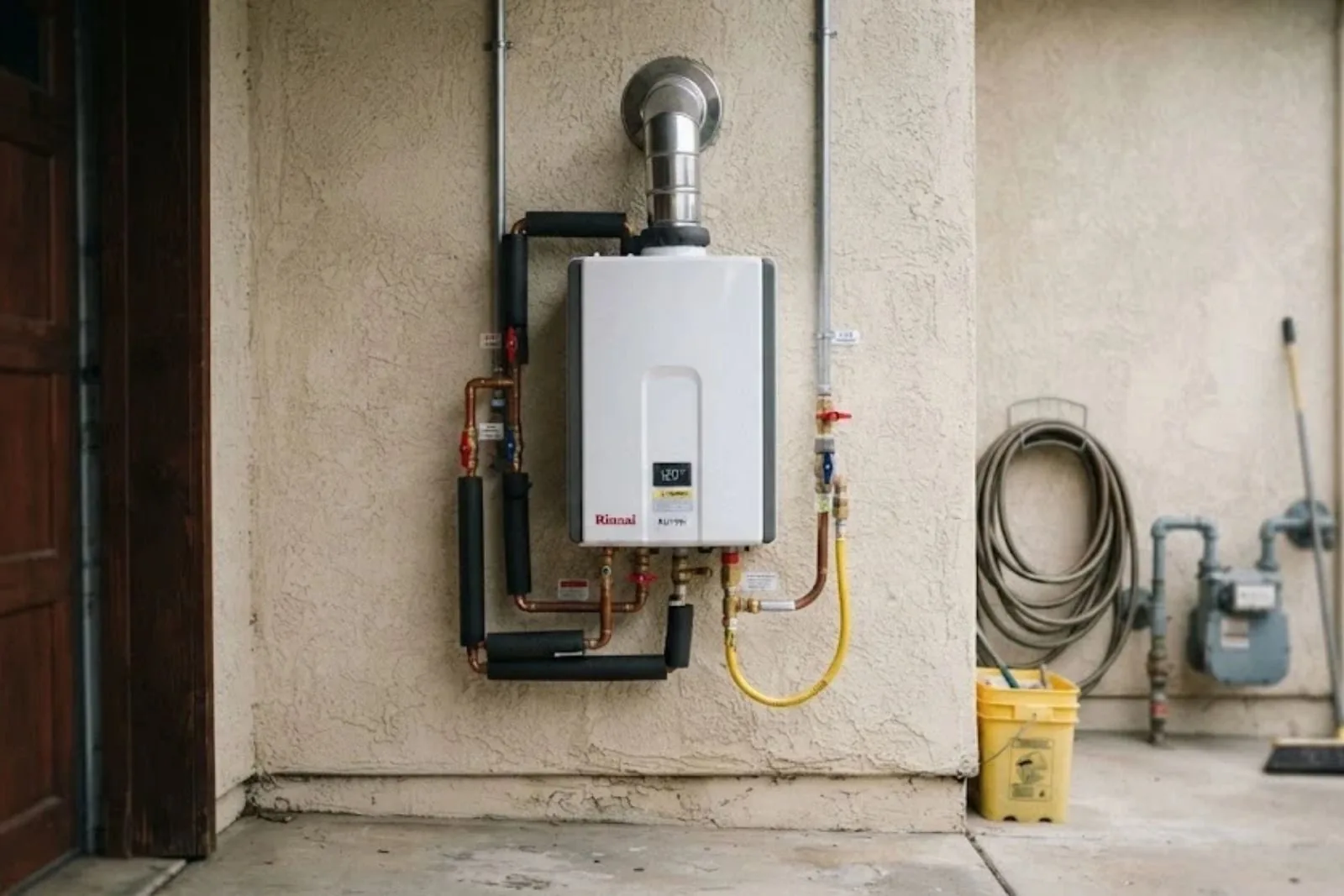
Yes, a tankless heater can run a shower well. It heats water as it flows, so the question is never tank size. The questions are how much water you run at once, how cold the incoming water is, and whether the gas line and vent can feed the unit.
One shower is easy for most units. Two showers plus a dishwasher is where undersized units fall short. Sizing is a short calculation, and a plumber should do it before a unit is chosen.
Why a tankless unit never runs out but can still run short
A tank heater stores a batch of hot water and runs low when the batch is used up. A tankless unit has no batch. It fires a burner or an element whenever water moves through it, and it keeps going as long as the tap is open.
The catch is that the unit has a ceiling on how much water it can heat per minute. Ask for more flow than it can warm, and the water does not run out. It just comes out less hot.
That is the mistake behind most complaints about tankless showers. The unit worked fine. It was simply too small for the house.
How flow and temperature rise decide the shower you get
Two numbers matter, and both are on the unit's data sheet.
| Factor | What it means | Why it matters for a shower |
|---|---|---|
| Flow rate | Gallons per minute the unit can heat. | A shower head, a faucet, and a dishwasher each take part of it. |
| Temperature rise | How many degrees the unit adds to the incoming water. | Colder inlet water means a larger rise, so lower flow capacity. |
| Gas input | The burner size, in BTU per hour. | A bigger burner heats more water per minute but needs more gas supply. |
| Minimum flow | The lowest flow that makes the unit fire. | A very gentle trickle can leave you with a cool or cycling stream. |
Use a rough example. A shower at a comfortable warmth from a very cold winter inlet needs a big rise, perhaps 60 degrees Fahrenheit. In July the same shower needs less, so the same unit can feed more fixtures.
What cold Colorado winters do to the math
Water coming into the house is colder in winter than in summer, and a tankless unit has to make up the difference. A unit that runs two showers in August may handle only one in January.
So size the heater for the coldest weeks of the year, not for a comfortable day. Ask your plumber to show you the flow the unit can deliver at a winter rise, not just the headline number on the box.
Households where tankless usually works, and where it needs a second look
This is a rough guide, and every house is different.
Usually a good fit
- One or two people showering at different times.
- A single bathroom group close to the heater.
- A new build with the gas and vent routed for it.
- A household that wants to stop heating a full tank all day.
Needs a closer look
- A big household with back-to-back showers and a dishwasher.
- A body spray or rain head with a high flow rate.
- An older gas meter and line that cannot feed a large burner.
- A heater location with no clear path for a vent.
Two showers and a dishwasher at the same time
Add up the flow of every fixture that might run together. A shower head, a second shower head, and a dishwasher cycle can total more than a small unit can heat. You do not have to run every fixture at once, but you should know what happens when two do.
There are fixes. A larger unit, two smaller units serving separate zones, or a flow limit on the shower head are all options. Each has trade-offs in gas supply and cost, which is why a plumber should look at the layout first.
One more habit helps. Wash the dishes or run the dishwasher outside peak shower time, and nobody notices the demand.
What to settle before you order a unit
These five checks come before brand or model.
- Count your peak demand.List the fixtures that can run together and add up their flow.
- Check the gas supply.A tankless burner is often much larger than a tank heater burner. The meter and the pipe feeding the heater may need a closer look.
- Plan the vent.Tankless units need a vent path to the outside that matches the unit and the length of the run. A longer or twisted route can limit your choices.
- Think about the condensate.High-efficiency units produce acidic condensate that needs a drain and sometimes a neutralizer.
- Ask about permits.Rules differ by job, so ask the Firestone building division what yours needs.
Gas line and venting questions that catch people out
The most common surprise is the gas line. A tank heater uses a modest burner. A tankless unit that can heat a whole house of showers asks for more gas at once, and a line sized for the old heater may not deliver it.
The vent is the second surprise. Tankless units usually need a vent made for the unit, run to the outside in a path the maker allows. Reusing the old flue pipe is often not an option. The maker's installation guideline sets the vent type and the longest run allowed, so get that page before you plan the wall it exits.
These are design questions for a licensed plumber, not a weekend project. A professional install by a licensed plumber handling the gas, vent, and water connections is the safe route. If you smell gas at any time, leave the house and call the gas utility or 911 before anything else.
Looking after a tankless unit once it is in
A tankless unit needs periodic flushing to clear mineral deposits from the heat exchanger. The schedule depends on your water and on the maker's guidance. Flush intervals are not a place to guess.
If a unit starts flashing an error code, shows a cold stream, or cycles on and off, a plumber can read the code and find the cause. For planned work on one, see our tankless water heater page.
What this means in Firestone, CO
Water from the Carter Lake plant is classed as soft by its district, so scale builds slowly. A tankless heat exchanger still needs flushing, so follow the maker's schedule.
Two suppliers feed the Town, and not every address has a published hardness figure. Ask your water utility which one serves your home.
Homes in Dacono are served by the City of Dacono, so ask the City for its water quality report before you plan maintenance. Erie homeowners weighing the same setup can read the notes on our Erie page, and the gas and vent questions are identical.
Questions homeowners ask
It depends on the unit and on the season. A larger unit in a mild month can run two. The same unit in deep winter may manage one.
Ask your plumber to size it from your fixtures and a winter inlet temperature.
It can, if the unit is near its limit. A faucet takes part of the heated flow and the shower stream gets cooler.
The fix is a larger unit or a second one, not a different shower head.
Often the answer is yes, or at least a check. Tankless burners ask for more gas at once than most tank heaters.
A licensed plumber can measure the demand and the existing line. Gas work is not a do-it-yourself task.
Yes. Minerals collect inside the heat exchanger over time. The interval depends on water quality and on the maker's guidance.
No. The district behind much of the Tri-Town supply calls its water soft, so scale forms more slowly than in hard-water areas. It does not stop forming.
Because Firestone buys from two suppliers, check which one serves you and read its report.