
A hidden leak in Firestone, CO does not keep office hours, and our 24/7 emergency line does not either. Leak detection means locating a water or drain leak you cannot see, using listening gear, heat cameras, tracer gas and pressure tests, so the repair opens one small spot instead of a whole room. If water is spreading, close the main shutoff now and call.
Keep people and pets out of any room where water sits near outlets or the electric panel. If you smell gas anywhere in the house, leave and call the gas utility or 911 before you call us.
Not every leak is an emergency. A bill that climbs for no clear reason, or a damp spot that keeps coming back, still deserves a same-day appointment when available, because slow leaks rot framing and feed mold long before they flood anything.
Water is moving right now: do these first
Four quick moves limit the damage while a plumber is on the way.
Close the main shutoff.
Turn the main valve clockwise until it stops. Look near the water heater, in a utility room, or where the line enters the house. Learn the spot today so you are not hunting for it in a panic.
Drain the lines.
With the main closed, open the lowest faucet in the house. That relieves pressure and stops water from pushing out of the break.
Stay off wet electrics.
Do not stand in water to reach a breaker. Keep clear of wet outlets, power strips, and anything plugged in near the puddle.
Protect and photograph.
Lift rugs, boxes, and electronics off the floor, then take photos of the damage and the wet area for your records.
Smell gas? Leave.
A gas odor means everyone goes outside. Call the gas utility or 911 from outside, then call us.
How a leak gets found without tearing up the house
Water follows pipes, framing, and slab edges before it shows up as a stain, so the wet spot you see can sit several feet from the real source. A leak finder's job is to shrink that guess down to one patch of drywall or one short trench.
The visit starts with questions. When did the bill change, which fixtures run, is there a hiss at night, which part of the floor feels warm. Then the gear comes out, matched to the pipe material and the way the lines run. Copper, plastic, and cast iron carry sound and heat differently, so the method changes with the pipe.
We also sort supply leaks from drain leaks. A supply leak keeps pressure and often hisses. A drain leak only shows when water is sent down the line, so the test is to run fixtures and watch where it appears.
Hear water running with every tap off?
Close the main, then call (303) 552-3896 and describe what you hear.
Which tool finds which kind of leak
| Method | Best for | Limits |
|---|---|---|
| Acoustic listening | Pressurized supply lines that hiss behind walls or under floors. | Needs a quiet house. Traffic or a running appliance can mask the sound. |
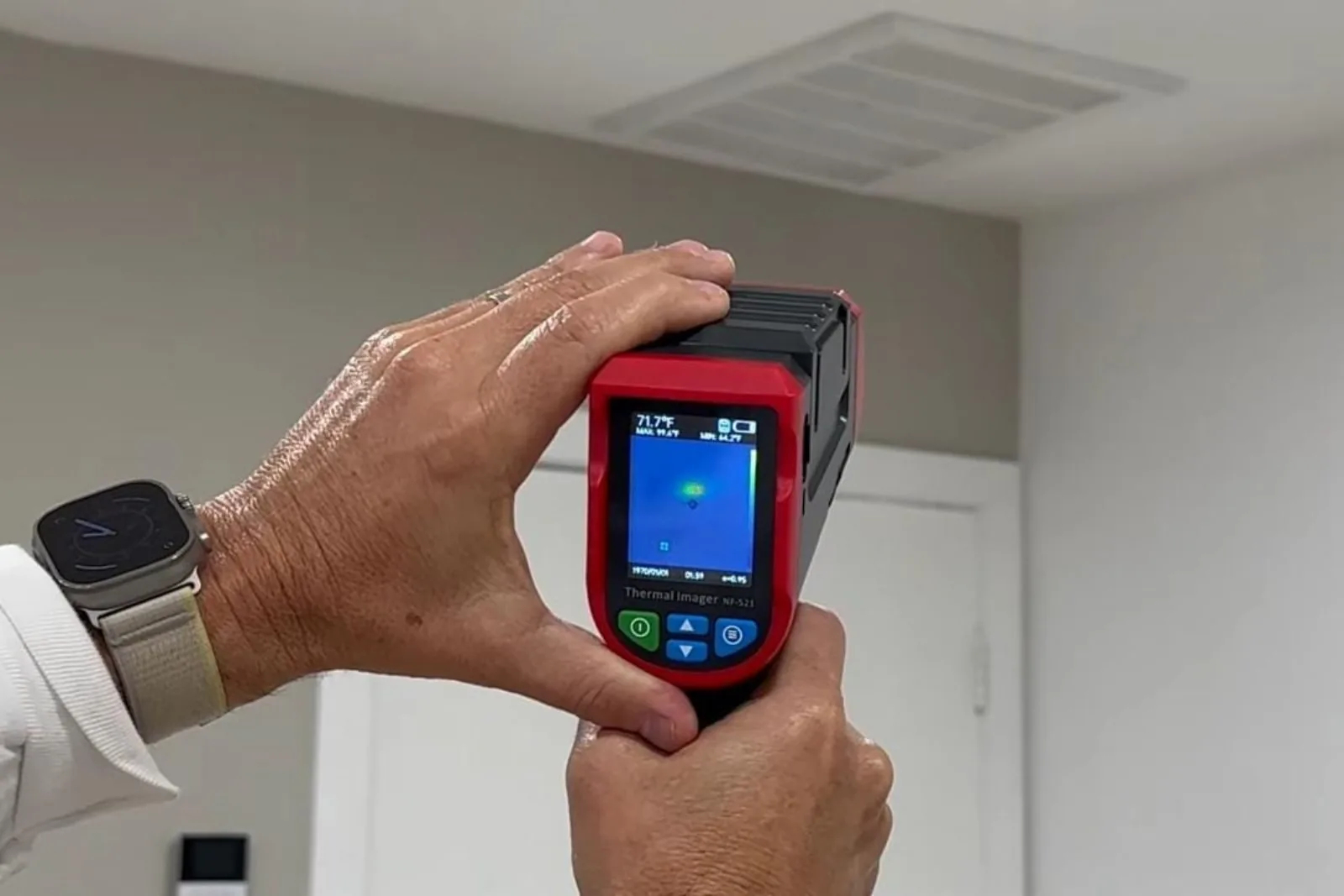
| Thermal imaging | Hot water lines, wet insulation, and damp drywall. | Shows temperature difference, so it points to an area and not an exact joint. |
| Tracer gas | Small leaks that sound and heat will not reveal, including some drain leaks. | The line must be isolated and the gas needs a path to the surface. |
| Pressure testing | Proving that a section of pipe holds or loses pressure. | Confirms a section leaks, then another method narrows the spot. |
Two methods usually agree before anyone cuts anything. When they do not, we run another test instead of opening a wall on a maybe.
Read your water meter to prove the leak
A high bill does not always mean a leak. Hot weather, a new sprinkler schedule, and houseguests all raise use. A bill that jumps while nothing changed is worth a meter test, and the test costs nothing but a little patience. Whether you live in ZIP code 80504 or 80520, test the meter that matches the supplier on your bill.
- Stop all water use.Close every tap, pause the dishwasher and washer, and turn off the sprinkler clock. Check that the ice maker is not refilling.
- Find and open the meter box.It usually sits in a lidded box near the street or the front of the lot. Lift the lid carefully and wipe the glass clean.
- Watch the small leak dial.Many meters have a triangle or star that spins when any water passes. If it moves with everything off, water is escaping somewhere past the meter.
- Write the numbers down.Note the full reading, wait an hour without using water, then read again. A changed number confirms a leak, and a big change hints at a big one.
- Close the house main and look again.If the dial keeps turning with the main shut, the leak is outside, between the meter and the house. If it stops, the leak is inside the walls, floors, or fixtures.
Stains on the ceiling and damp walls
A brown ring on a ceiling, bubbling paint, or a soft patch of drywall means water has been present for a while. Shut off the supply to the fixture above if you can and set a bucket under the stain.
If a ceiling is bulging, a small hole at its lowest point lets the water drain in a controlled way. Stand clear of the spot and any light fixture while you do it.
Bathroom overhead.
Shower pans, tub overflows, and toilet supply lines often sit right above the room that shows the stain.
Warm patch on a wall.
A warm spot on drywall can mark a hot water line, and thermal imaging shows it without a single cut.
Stain that grows after rain.
That points to roof or window water, not plumbing. We will tell you so instead of opening walls.
Stain only when a fixture runs.
That suggests a drain joint, a loose trap, or a failing seal under a tub or shower.
Musty smell with no stain.
Moisture can sit inside a wall cavity for weeks. Pressure testing or imaging finds the line before mold does.
Under the house: crawlspaces and basements
If your home has a crawlspace or basement, the pipes are exposed and the search can start there. We look for drip stains on joists, rust-streaked fittings, wet insulation, and white mineral crust where water has dried over and over. Hanging supply lines and drain joints are checked one section at a time.
Water on a basement floor is not always plumbing. A damp edge along the wall after sprinklers or rain is a drainage question, covered on our page about seepage through foundation walls. We run fixtures and read the meter first, so you know which problem you have before anyone quotes a fix.
A basement that floods from the floor drain or the sump pit is a separate case. A pump that stalls or a check valve that fails is handled under sump pump repair.
The buried line between the meter and your house
The pipe running underground from the meter to the house hides the leaks that raise a bill without leaving a stain. Clues include a meter that keeps moving with the house main closed, a strip of lawn that stays green or soggy, soft ground near the entry, and pressure that drops for no reason.
We use ground microphones to listen along the route, tracer gas to confirm small leaks, and pressure tests to prove the line is the problem. Then the dig is short and aimed. Firestone buys its treated water from Central Weld County Water District and St. Vrain Water Authority, so ask the supplier on your bill where its pipe ends and yours begins before anyone digs.
When the pipe is worn out and not just cracked in one place, a new run costs less than repeated digging. That conversation belongs to water service line replacement, and we will lay out both options. Any new run is installed to the 2021 International Plumbing Code (IPC) as adopted in Colorado, and the Firestone building division can say whether it needs a permit.
Homes on a slab: signs the leak is beneath the floor
Slab-on-grade homes carry supply lines under or inside the concrete. Slab leaks are real, but many of the clues below also have harmless causes, so a test comes before any cutting.
- A warm spot on the floor.A hot water line leaking under tile or wood can warm one patch of floor.
- Water sounds with everything off.A faint hiss or trickle at night, with no tap open, suggests pressure escaping somewhere.
- Damp baseboards or lifting flooring.Moisture wicks upward, so look at the lowest trim and any flooring seams.
- A meter that moves with taps shut.This proves water is leaving the system. The location is the next question.
- Low hot water pressure.A pinhole on a hot line often shows up as weaker hot flow before anything gets wet.
Sprinklers, pools, and the meter box
Sprinkler lines are the most common outdoor leak. A cracked head, a failed valve, or a split buried line leaks only while a zone runs, so a soaked patch that appears on schedule points to irrigation. Run each zone and watch the meter. Some water providers send notices about annual backflow assembly testing, so ask about that device while we are on site. New devices fall under plumbing installation.
Pools and hot tubs lose water to evaporation, so a bucket test shows whether the loss is a leak. We handle the plumbing lines, valves, and equipment connections, and not the shell or liner.
Water pooling in the meter box can mean a leak on the utility side or at your shutoff valve. Do not dig around it. Call your water provider if the leak is at the meter, and call us if it is at your valve or on your side. A rural parcel around Mead may run on a well, so there may be no utility meter to read.
What changes the price of leak detection
Leak detection pricing depends on how hard the pipe is to reach and how many tests it takes to be sure. We give a clear price before work starts.
Sudden pipe bursts are the typical event a homeowner policy covers, while slow leaks and worn pipes usually are not. Read your own policy, since we cannot speak for your insurer.
Want your real number? Describe the problem and the price is clear before work starts. Call (303) 552-3896.
Questions about leak detection in Firestone
Yes. The emergency line runs 24/7, including nights, weekends, and holidays. Close the main shutoff, keep clear of wet electrics, and call (303) 552-3896.
Same-day appointments are offered when available for leaks that are slow and contained.
Start with the meter test above. A dial that moves with every tap closed means water is escaping. Other signs include a rising bill, warm floor spots, musty smells, and the sound of running water in a quiet house.
Often the area can be narrowed with listening gear and thermal imaging before anything is cut. The repair may be a small opening or a reroute. A dedicated slab leak page may follow on this site, but we take those calls now.
No. Roof leaks, window seepage, and condensation on ducts all leave similar stains. If the stain grows after rain, start with the roof. If it grows when a fixture or the water heater runs, the cause is likely a line or a fitting.
That points to the buried line between the meter and the house, or to a leak at the shutoff itself. Leave the main closed and call. We can listen along the route and test the pipe before any digging starts.
Yes. Our plumbers are licensed, and the same call covers locating and fixing the pipe. A burst section moves to burst pipe repair, and clear price before work starts applies to both.
The answer depends on your water provider. Ask which supplier serves your address and where its responsibility ends. We can show you which side of that point the leak sits on.
Colorado licenses plumbers at the state level through DORA, and anyone can look up a license on the DORA website. The Firestone building division can say whether a given repair needs a permit.