
Plumbing installation in Firestone, CO is planned work: setting new fixtures, running new supply and drain lines, and connecting appliances to the pipes already in your walls. Unlike a leak call, you choose the timing, so most of the effort goes into preparing the job well. A phone conversation first helps a licensed plumber understand the space.
Firestone has grown quickly, from about 10,000 residents in 2010 to more than 16,000 in 2020. That means a lot of newer homes finishing basements, adding bathrooms and putting in laundry rooms, and a smaller number of older original-townsite houses with pipes of a different generation. Tell us your home's age if you know it, since older lines can change the plan.
Calls come in from ZIP codes 80504 and 80520 and nearby towns. Below is what we install, how a planned job runs, and the notices and permits that tend to surprise people.
Fixtures and lines we install
Typical installation work includes sinks, toilets, showers and tubs, laundry hookups, outdoor faucets, water heaters and fixture swaps. We also reconnect a sink or dishwasher after a remodel when the cabinets or countertops have moved. A new sink often means a new garbage disposal connection too.
Some projects need more than a fixture. Moving a sink to a new wall means new supply and drain runs, and venting that keeps drains flowing. If your plan changes the layout, say so on the call so the plumber can look at the route. Drain slope and venting for a moved fixture follow the 2021 International Plumbing Code (IPC) as adopted in Colorado, so a licensed plumber plans them before the walls close.
Common hookups at a glance
| Job | What it involves | Worth deciding first |
|---|---|---|
| Washer and dryer hookups | Supply valves, a standpipe and drain. | Where the machines will sit. |
| Shower or tub install | Valve, drain, supply and trim | Whether the wall will be open. |
| Sink reconnection | New supply lines, trap and shutoffs. | Cabinet and countertop timing. |
| Outdoor faucet | Supply tap, shutoff and spigot | Where the line enters the house. |
| Water heater install | Sizing, venting and an expansion tank. | See water heater installation. |
Planning a project? Call us
Describe the room and the fixtures. We will talk through the plan.
How a planned job usually runs
- Describe the project.Give the address, the room and what you want connected. Photos of the space help.
- Talk through scope.A plumber discusses routes, access and what has to be opened up. This is the consultation.
- Agree on the price.You get a clear price before work starts, and any change in scope is discussed first.
- Install and test.Lines are connected, pressure and drains are checked, and fixtures are tested before the visit ends.
New construction and rough-in plumbing
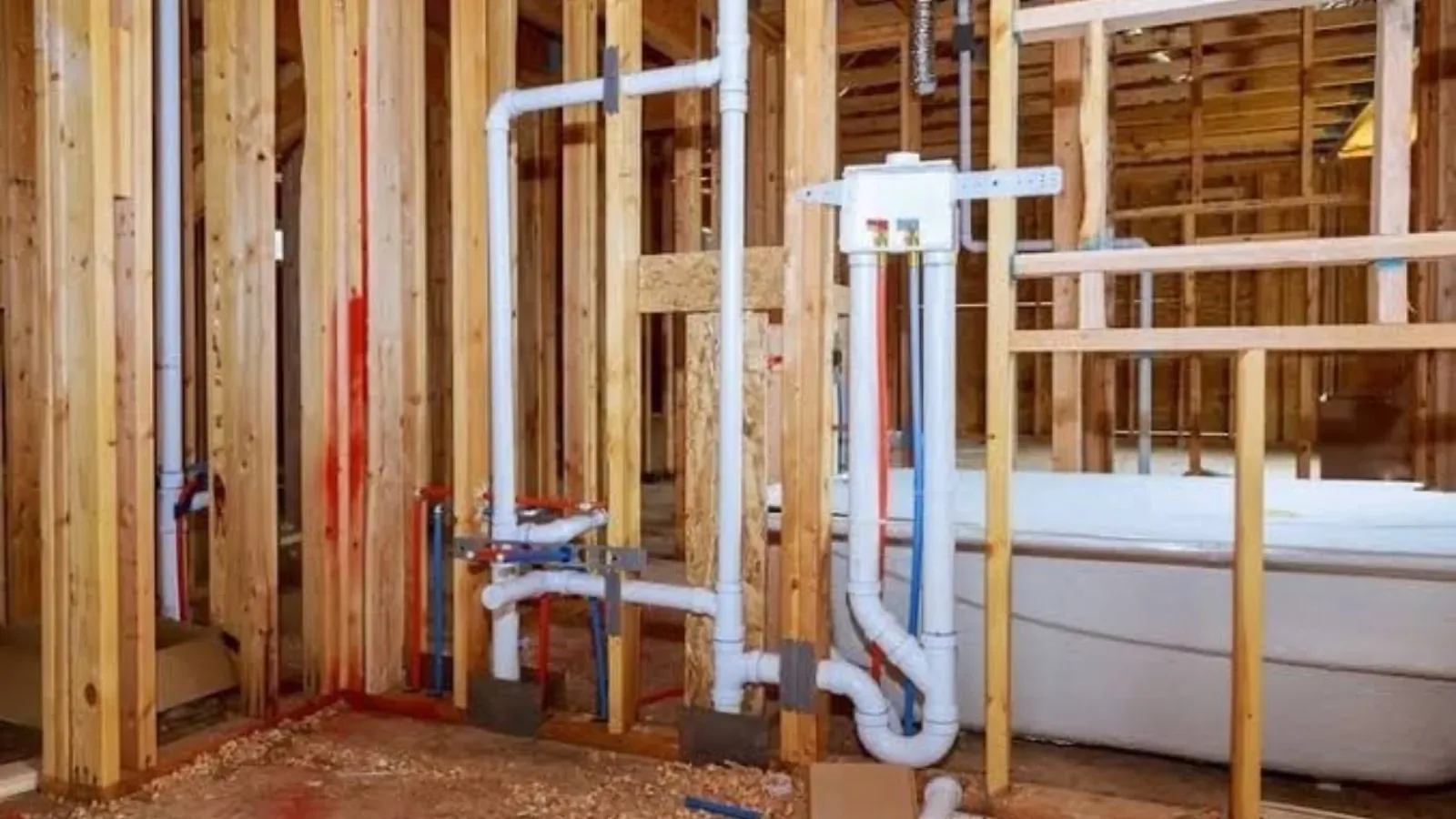
Rough-in is the pipe work installed before walls and floors are closed. It includes the drain and vent lines, the water supply and the stub-outs where fixtures will later connect. Because it must pass inspection before the drywall goes up, the plumber needs to be on the schedule early.
For new homes, additions and finished basements, bring a drawing if you have one. A plumber can talk through where drains need to fall, where supply lines run and where access panels should stay. We describe scope, and the Firestone building division decides what the permit process requires.
Permits and plumber licenses in Firestone
Permit rules vary by job, so ask the Firestone building division at the Town, which also uses an inspection partner. The Town's guidelines say that permits needing a licensed plumber must list the plumber and the state license number, and inspectors may fail an inspection if they cannot verify it. You can check any plumber on the DORA license lookup, and doing that before the work starts saves you a failed inspection later.
Backflow assembly testing and your water provider's notice
A backflow assembly sits on a water line to stop dirty water flowing back into the supply. Irrigation systems, fire lines and some commercial properties carry one. Many water providers require them to be tested on a regular schedule, and the provider sends a notice with a deadline.
The Town of Firestone buys its treated water from supplier districts, so the notice may come from a supplier and not from the Town. If you receive one, keep it, note the due date and call to arrange testing and any repair. If you are unsure whether your property needs a test, ask your water provider first. For businesses with a device, see commercial plumbing.
Before the plumber comes
- Clear the work area.Move boxes and furniture so the plumber can reach the fixture and the shutoff.
- Locate the main shutoff.Know where it is and that it turns. A stuck main is worth fixing before the work.
- Have the fixture or appliance on hand.Brand and model numbers decide which fittings are needed.
- Gather any drawings or permits.Plans and prior permit paperwork let the plumber see what is behind the wall.
- Note any old plumbing problems.Slow drains or low pressure near the job can change the plan.
What changes the price of plumbing installation
Installation prices depend on the project, so we explain them in plain terms before work starts.
Planned installations are normally paid for by the owner. Insurance usually responds to sudden damage, not upgrades, so check your own policy if an installation follows a loss.
Ready to price your project? Walk a plumber through the scope by phone and get the price in plain terms. Call (303) 552-3896.
Questions about plumbing installation in Firestone
Yes. Planned work is easier to fit than emergencies, and we offer same-day appointments when available. Tell us your preferred day and any access limits.
It is a conversation about the project with a licensed plumber, before work starts. You describe the space, the plumber asks about routes and access, and you agree on a clear price.
Yes. Rough-in happens before walls close, so call early. Bring drawings and ask the Firestone building division about permits for your project.
Read the notice for the deadline and the provider's name. Call us to arrange a test and any repair, or ask the provider first if you are unsure the device is yours.
Permit rules vary by job. Ask the Firestone building division, which can tell you what your project needs before you start.
Yes. We set supply valves, a standpipe and a drain. Tell us where the machines will go and whether a floor drain is nearby.
Yes, Erie is part of our service area. Give the address on the call.