
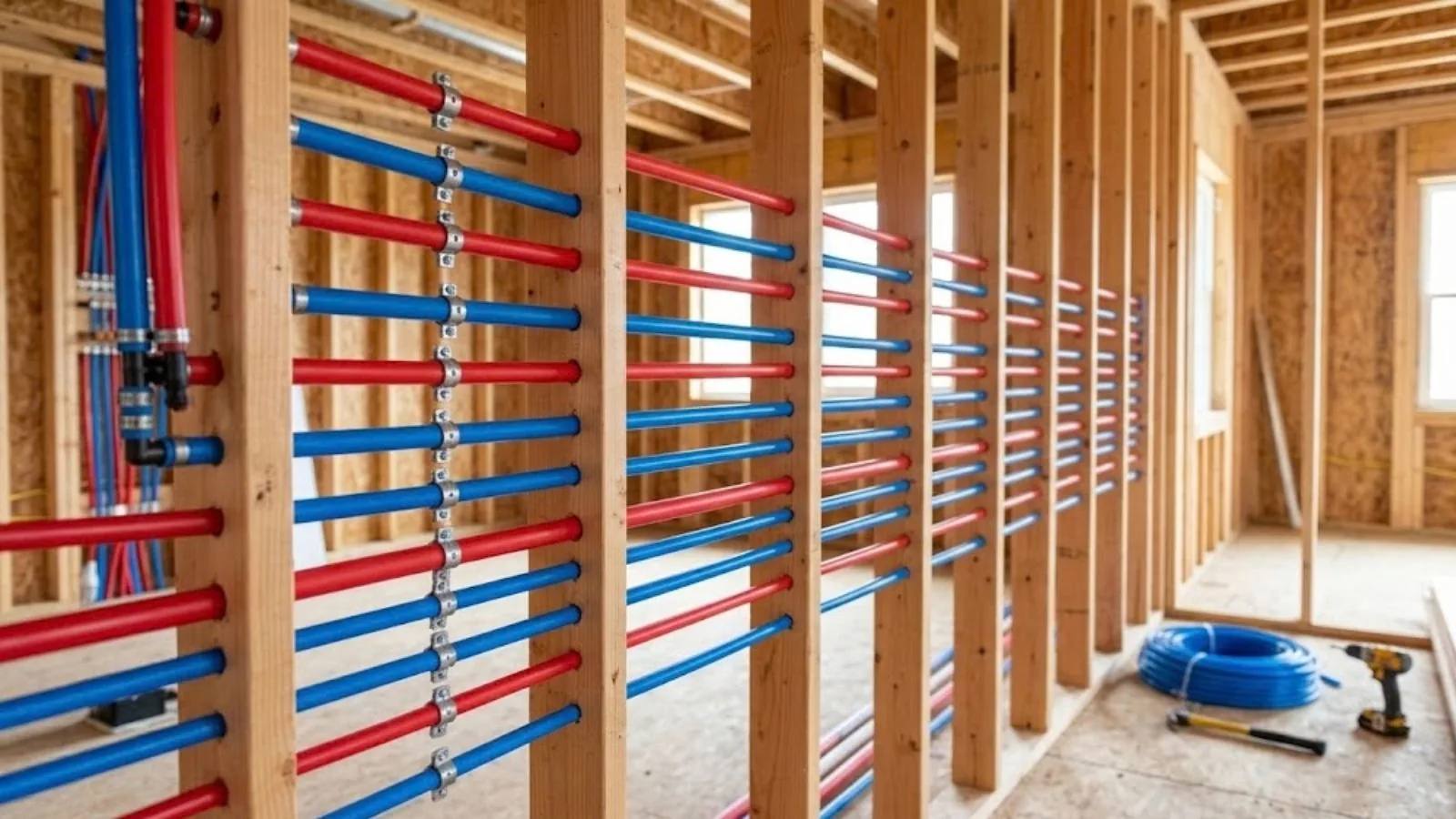
Repiping in Firestone, CO means replacing the water supply pipes in a home, either the whole system or the one run that keeps failing. It covers the lines that feed faucets, showers, and appliances, and in some jobs the buried pipe from the meter to the house.
Most homes in town are newer, so many owners will never need it. Firestone's population grew from 1,908 in 2000 to 16,381 in 2020, which tells you most houses went up after the year 2000. Repiping tends to matter for older homes, original-townsite houses, and specific runs that have failed.
If you are not sure which group you are in, a phone call usually sorts it out. Describe the water color, the pressure, and any leaks, and we tell you honestly whether repiping is the answer.
Which Firestone homes actually need new pipe
The original townsite was platted in 1907, running north to Grant Avenue, east to Fourth Street, south to McClure Avenue, and west to First Street. Homes inside that area are far older than the subdivisions around them, so older supply materials are more likely to turn up there. If yours is one, ask us to check what the pipe is made of before you plan a renovation.
Homes built after 2000 usually carry newer pipe, and a failure there is more often one bad fitting or one damaged run than a tired system. That is a spot repair. A full repipe is a bigger job and we say so when the evidence does not support it. It is licensed work done to the 2021 International Plumbing Code (IPC) as adopted in Colorado, so ask the Firestone building division about a permit before you book.
Across ZIP codes 80504 and 80520 the first question is identical. What is the pipe made of, how old is it, and how often has it failed? Older houses elsewhere in the Tri-Towns, including Dacono, raise the same questions.
Signs a run is wearing out
Brown or rusty water.
Water that runs brown when you first open a tap and clears after a minute often points at corroding steel pipe.
Repeated pinhole leaks.
One pinhole is a repair. A second in a different spot on the same pipe suggests the wall is thin everywhere.
Pressure that fades over time.
A slow drop across several fixtures, with the main valve fully open, can mean pipe interiors are narrowing.
Green crust on copper.
Blue-green buildup on joints and fittings means water is seeping and the metal is reacting.
Stains in ceilings and walls.
Rings that return after you dry them point at a joint or pinhole behind the surface.
Flaking at the faucet.
Bits of rust or mineral in aerators suggest the pipe is shedding material.
Not sure repiping is needed?
Describe your water color and pressure on a call to (303) 552-3896.
Low water pressure: pipe, valve, or regulator
Low pressure at one tap is usually a clogged aerator or a worn cartridge. Low pressure at every tap points elsewhere. Galvanized steel narrows from the inside as rust and mineral build up, so water squeezes through a smaller opening each year.
Before anyone talks about repiping, check the cheaper causes. A main valve that is only partly open, a failing pressure regulator, or a closed valve at the meter can all mimic bad pipe. We test pressure at the house to separate these, and a good result saves you a big job.
Hot water only is a different case. If cold flow is strong and hot flow is weak, the water heater or its supply line is a better suspect than the whole house.
Pipe materials you may find in a house
| Material | Typical trouble | What a repipe looks like |
|---|---|---|
| Galvanized steel | Rust inside, low pressure, brown water. | Full replacement is common, since the whole run ages together. |
| Copper | Pinholes, worn joints, green crust | Spot repair first. Full replacement if pinholes keep spreading. |
| CPVC | Brittle fittings that crack with age or cold. | Replace failing runs or the whole system if cracks repeat. |
| PEX | Damaged fittings, sun damage where exposed. | Usually a fitting repair. Full replacement is rare. |
Material alone does not decide it. How the pipe has behaved over time matters as much as what it is made of.
Repair one run or repipe the house
Cost and mess both go up when a whole system is replaced, so we only recommend it when it pays off. A burst pipe repair is the right answer for a single split, while a pattern is a repipe conversation.
Repair is enough when
- One pipe failed and the rest tested fine.
- The failure came from a freeze or an impact.
- The pipe is in good shape apart from the one failure.
- Pressure is normal everywhere else.
A repipe is worth pricing when
- Leaks keep appearing in different rooms.
- Water runs brown at every tap.
- Pressure has faded across the whole house.
- The pipe is galvanized and you plan to open walls anyway.
Replacing the pipe from the meter to the house
The water service line runs underground from the meter to your house, and it can fail even when the pipes inside are fine. Signs include a meter that moves when everything is off, soft or green ground in the yard, and a sudden pressure drop. A leak search confirms the line is the problem before any digging.
Treated water here comes through Central Weld County Water District and St. Vrain Water Authority. The supplier named on your bill can tell you where its pipe stops and yours starts. That boundary decides who pays for which part, and it is cheaper to learn it before the trench is open.
The Town's 2024 consumer confidence report lists the lead 90th percentile at 2.1 ppb against an action level of 15 ppb. That figure describes the system, not your house. If your home is older, ask us what your pipes are made of, run taps several minutes after water has sat, and consider an ANSI-certified filter. See water filtration for options.
What a whole-house repipe involves
The details change from house to house, but the job follows a pattern.
- Walk the house.We trace the lines, count fixtures, and decide where access is easiest. Attics, crawlspaces, and closets often carry most of the new pipe.
- Plan the openings.Small access holes in drywall are cut where lines turn or connect. We talk through where they go before any cutting starts.
- Run the new lines.New pipe goes in, fixtures are reconnected, and the old lines are capped or removed. Water is off for part of the day, and we explain how long before work starts.
- Test the system.The new lines are pressure tested before drywall closes. Which permit and inspection apply to your house is a question for the Firestone building division.
Get the house ready before the plumber arrives
- Clear access.Move items away from sinks, closets, and the water heater so plumbers can reach pipes.
- Plan around water shutoff.Store a day of drinking water and plan for brief periods without a toilet.
- Tell us about past leaks.Where pipes have leaked before points us at the weak runs.
- Protect finished surfaces.Cover furniture and remove wall art near planned openings.
- Think about the other jobs.If a bathroom remodel is coming, do the pipe work first so new walls are not opened twice. Fixture work falls under plumbing installation.
What changes the price of repiping
The price turns on house size, pipe material, and how much wall must open, and it is set before work starts.
Insurance usually does not pay to replace pipe just because it is old. A covered loss usually needs a sudden event like a burst, and your policy decides, not us.
Want your real number? Tell us the age of the house and what the water is doing, then hear the price before we start. Call (303) 552-3896.
Questions about repiping in Firestone
Most homes here are newer than 2000 and do not. Repeated leaks in different spots, brown water at every tap, and low pressure that does not fix itself point toward it. Call and we help you decide.
Yes. A single failing run can be replaced without touching the rest, and sometimes that is the sensible choice. We recommend a full repipe only when the evidence supports it.
Both are used in homes today. PEX often handles freezing a little better and is flexible to route. CPVC is rigid and brittle with age. We choose based on your house and the code, and we explain the choice.
Both. A pinhole or a single bad joint is repaired. If pinholes keep showing up on the same line, the pipe is wearing out and replacement is the better value.
It depends on the size of the job, and we explain it before work starts. Water may be restored in stages so you are not without it all day.
Ask the supplier on your water bill. Responsibility often changes at the meter, and the exact point is what decides who pays.
For permit questions, the Firestone building division has the answer. A permit that needs a licensed plumber lists the plumber and license, and the Town verifies it.
Only if worn pipe is the cause. We check the regulator, valves, and meter first, so you do not pay for a repipe that does nothing.