
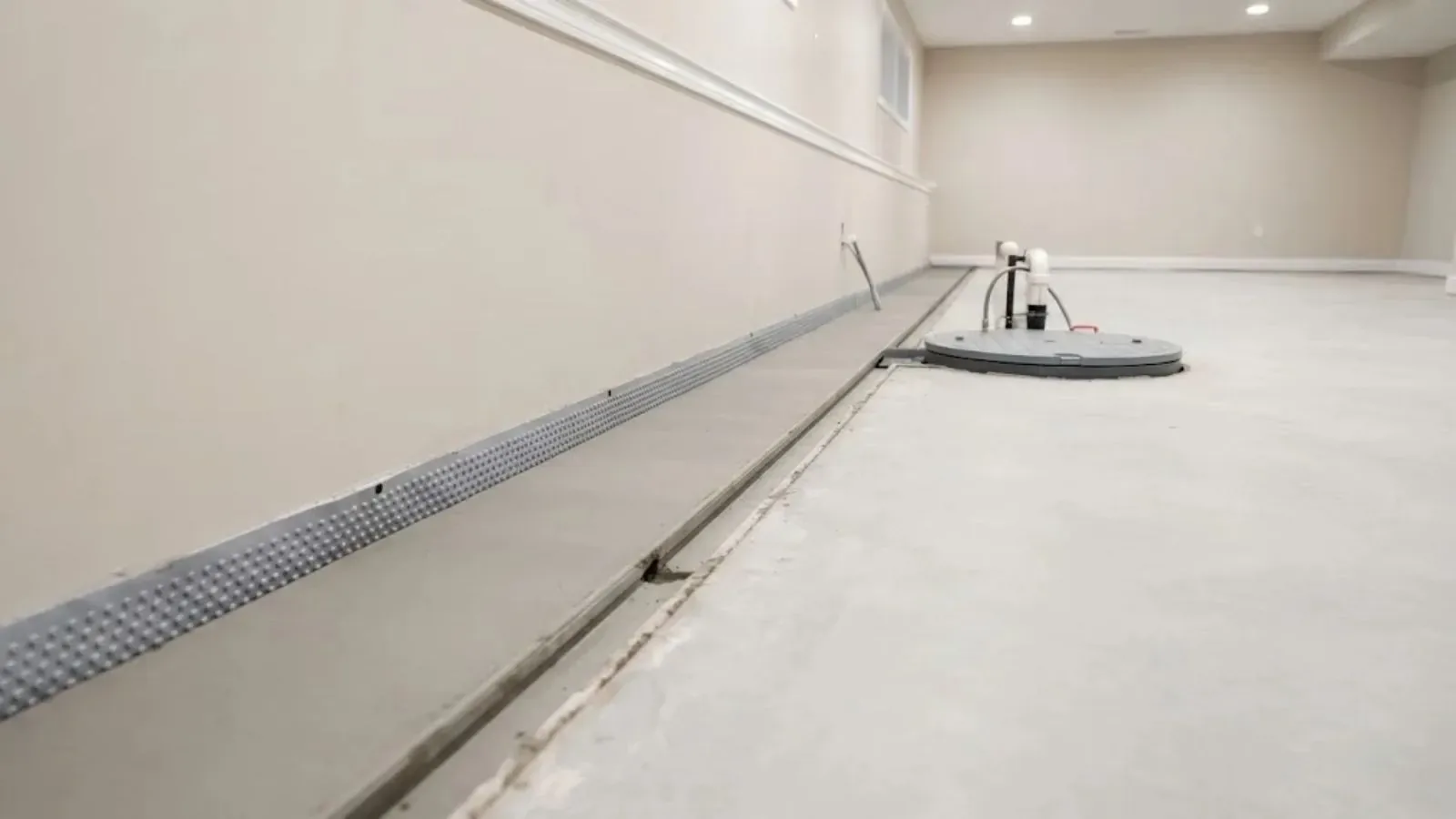
Basement waterproofing in Firestone, CO covers any work meant to keep water out of a below-grade space. Some of it is plumbing, such as a sump pump, a floor drain, or a leaking supply line. Some is structural or earthwork, such as grading and foundation repair, and that belongs to other trades.
We do the plumbing side and we say so up front. A good share of wet basements turn out to be a pipe, a drain, or a failing pump, and those are fixes we can make. When the cause is soil or the foundation itself, we tell you and point you to a soil engineer.
Standing water or a spreading flood is an emergency, and the 24/7 line is open for it. For a slow, damp problem, a same-day appointment is offered when available.
What we do and what we do not
Knowing the line between plumbing and structure saves you from paying the wrong trade.
What we do
- Test whether the water is coming from a pipe.
- Repair or replace a sump pump and its discharge.
- Fix floor drains, check valves, and backflow into the house.
- Replace a failed supply or drain line.
What we do not do
- Diagnose foundation movement or soil conditions.
- Repair structural cracks or install exterior membranes.
- Regrade a yard or move large amounts of earth.
- Pour or repair concrete slabs.
What to do while water is standing in the basement
Standing water and electricity are the real danger, so work through these in order and stop at any step that is not safe.
- Treat the water as live.Water near outlets, cords or an energized panel can carry current. If the water touches any of them, stay out and call the electric utility or an electrician first.
- Do not wade in.Do not walk through standing water near outlets or the panel, even in boots. Wait until the power is off and someone has confirmed it is safe.
- Shut off the water supply only if it is safe.If a pipe is the source, close the main valve, but only when you can reach it on dry floor. If you cannot, leave it and call.
- Move belongings from dry ground.Lift boxes, rugs and stored items out of the wet zone only from areas you can reach without stepping in water.
- Photograph everything for insurance.Take photos and short video of the water line, damaged items and the source if you can see it, before anything is moved or cleaned.
- Call us for the plumbing side.A stalled sump pump, a split supply line or a backed-up floor drain is plumbing. Call (303) 552-3896 and say what you see.
- Call a soil engineer or foundation specialist for structural cause.If the plumbing checks out, cracks, heaved floors or seepage through walls point to soil and foundation. We do not diagnose those.
Water on the basement floor?
Call (303) 552-3896 and we sort pipe from seepage.
What the Colorado Geological Survey says about soil
The Colorado Geological Survey calls expansive clay the state's most significant geologic hazard, and says most Colorado homes and roads sit on soil that may be expansive. Such soil can swell by 10 percent or more when wet. This is a statewide statement, and we do not say Firestone soil is confirmed expansive on any particular lot.
The practical meaning is simple. Water that lingers next to a foundation can move the soil, and moving soil can stress walls and slabs. The survey lists cracked and heaved slabs, patios, driveways, garage floors, and basement floors as signs, and a soil engineer, not a plumber, identifies the hazard.
If you see those signs, call a soil engineer before any waterproofing contractor. If you see them and also hear a pump or smell damp, call us as well, so the plumbing side is ruled out.
Plumbing leak or foundation seepage
| Clue | More likely a plumbing leak | More likely seepage |
|---|---|---|
| Timing | Wet in dry weather, or after use. | Wet after rain or sprinkler runs. |
| Meter test | Meter moves with all taps off. | Meter stays still. |
| Where it appears | Under a bath, near a water heater, along a pipe run. | Along the wall base or at a floor crack. |
| Water feel | Clean, sometimes warm | Cool, with a dirt or mineral trace. |
| Smell and stains | Rust on fittings, sweet musty smell. | White crust on concrete. |
No single clue settles it. The meter test and the timing together usually do.
A simple test to separate the two
- Shut off all water use.Close taps, pause appliances, and turn off irrigation, then read the meter.
- Wait and read again.A moving dial with everything off means a leak in the plumbing. The leak detection page explains the test in full.
- Note the weather.Write down whether it rained or the sprinklers ran in the last day or two.
- Look for clean versus muddy water.Clean water points to pipes. Water carrying silt points to groundwater.
Sprinklers, downspouts, and grading
The survey names poor surface drainage and irrigation water entering soil beside the foundation as the cause of many problems. Sprinkler heads aimed at the wall, a zone that runs too long, and a downspout that empties at the corner all put water right where you do not want it.
Soil next to the house should slope away rather than hold water. Downspout extensions should carry roof water several feet from the wall, and sprinklers should not wet the foundation. Fixing those costs far less than any waterproofing system, and they are things you can adjust yourself.
Households in ZIP codes 80504 and 80520 should recheck the sprinkler schedule after a wet month. A zone that runs on a timer through a rainy week can wet the same soil all season.
Drainage habits that cost almost nothing
- Extend the downspouts.Run each one well past the wall, onto ground that slopes away.
- Aim sprinklers away.Heads should not spray the foundation, and zones near the wall should run less.
- Clear the window wells.Leaves and debris keep wells from draining, so water stacks up against the glass.
- Keep soil sloped.Fill low spots beside the house so water runs away rather than settling.
- Watch for cracks.Photograph new cracks and note the date, because a soil engineer will want the history.
When the answer is a pump, a drain, or a pipe
Some wet basements are a plumbing failure in disguise. A stalled pump, a floor drain that backs up, or a split supply line can flood a floor with no help from the soil. Sump pump repair covers the pump, check valve, float, and battery backup, and burst pipe repair covers a split line.
A floor drain that backs up is usually a clogged line, not seepage. Clearing it falls under drain cleaning, and a camera shows whether roots or a collapse are behind it. A drain that gurgles when upstairs fixtures run points to the main line. Drain work follows the 2021 International Plumbing Code (IPC) as adopted in Colorado, so ask the Firestone building division whether a repair needs a permit.
We also serve Frederick and the other Tri-Towns, where the same questions apply. In every case, we say what is plumbing and what is not, and you hear the price before any work begins.
What changes the price of basement waterproofing
The price turns on whether the problem is a pump, a drain, or a pipe, and we set it before work begins.
Seepage and groundwater are commonly excluded from homeowner policies, while a sudden pipe break often is not. Your insurer can say how your policy treats seepage versus a sudden break.
Want your real number? Tell us what you see, and we set the price before any work begins. Call (303) 552-3896.
Questions about basement waterproofing in Firestone
We do the plumbing side of it. That means sump pumps, drains, and supply and drain lines. We do not install exterior membranes, repair foundations, or regrade yards.
The Colorado Geological Survey says most Colorado homes sit on potentially expansive clay, but that is a statewide statement. A soil engineer tests your lot and tells you what it is.
Do a meter test with all water off. If the dial moves, you have a plumbing leak. If it holds still and the basement is wet after rain or sprinklers, think drainage.
It pulls out the water that gathers in the pit. If water is moving through the walls, a pump helps but does not stop the source.
A soil engineer or structural engineer does. We do not diagnose foundation movement, and we say so rather than guess.
The Colorado Geological Survey says irrigation water entering soil next to foundations is a common source of problems. Adjusting sprinklers is cheap and worth trying first.
Yes. The line is open 24/7. If a pipe split, shut the main, stay away from wet electrics, then call (303) 552-3896.
Permit needs differ by job, so check with the Town building staff. A permit that calls for a licensed plumber gets the license verified.