
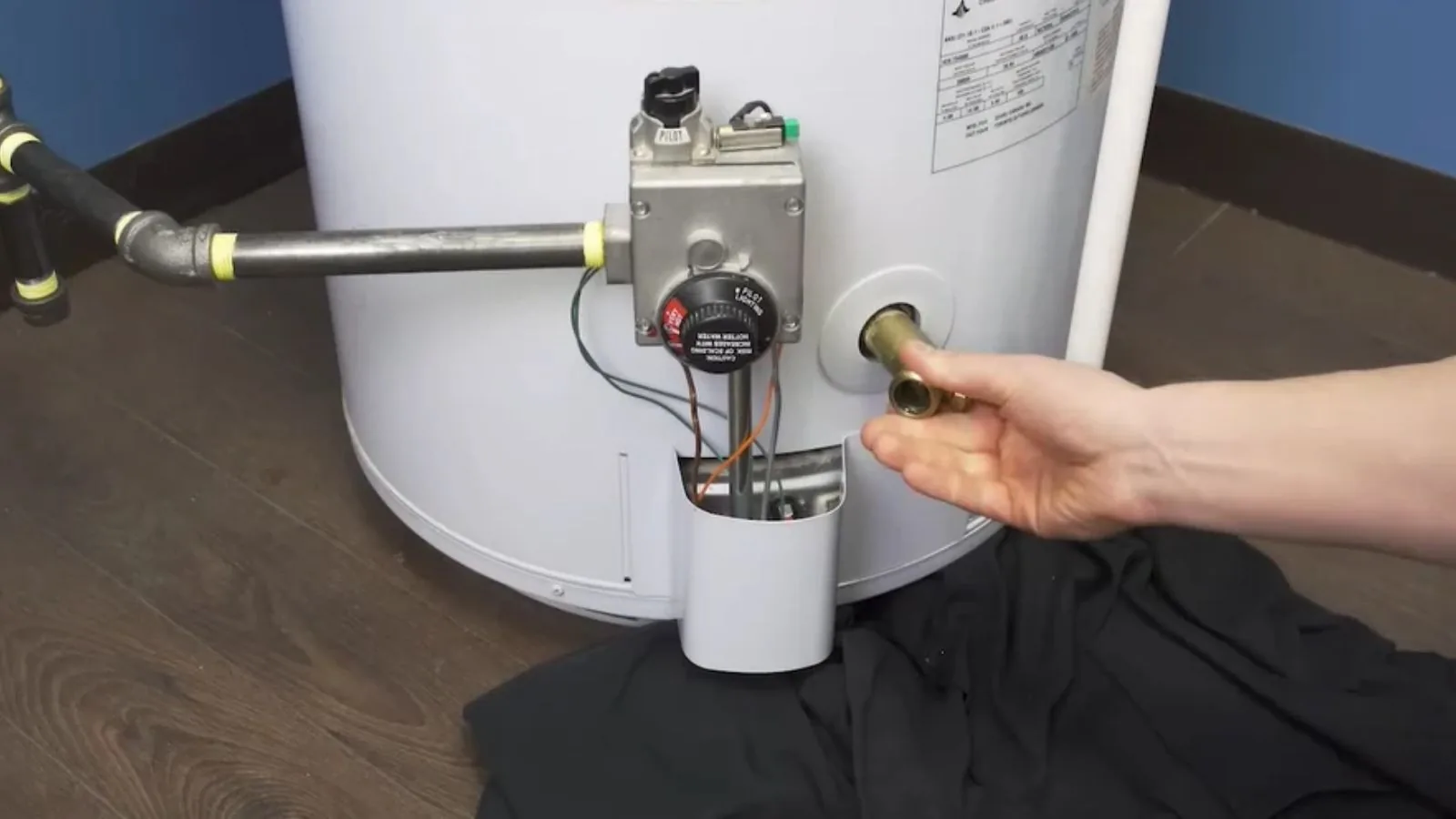
Emergency water heater repair in Firestone, CO means a licensed plumber finds the failed part, fixes it if the tank is sound, and tells you plainly if it is not. Our line runs 24/7. While you wait, close the cold supply valve above the heater if water is on the floor, and keep everyone out of the wet area.
If you smell gas or the pilot will not stay lit, stop reading and leave the building. Call the gas utility or 911 from outside, then call us. A repair can wait for that, and a gas leak cannot.
Homes in ZIP codes 80504 and 80520 may have gas, electric or hybrid units, so the first step is reading the label on yours. Most hot water failures trace back to a short list: a burned-out element, a worn thermostat, a bad thermocouple or gas valve, a leaking relief valve, or a tank that has rusted through.
Gas smell, pilot trouble or water on the floor
Handle the safety item before anything else. The repair comes after.
You smell gas.
Get everyone out of the building and avoid light switches and the garage door opener on the way. From outside, call the gas utility or 911. Call us once you are clear.
The pilot will not stay lit.
Do not keep relighting it. A pilot that goes out repeatedly can mean a bad thermocouple, a draft, or a blocked vent, and a blocked vent can push exhaust into the house. Leave the unit off and call.
Water is pooling at the base.
Close the cold supply valve on the pipe above the heater. Switch off the electric breaker or turn the gas control to off, but only if the floor around the panel or unit is dry.
The relief pipe is hissing or steaming.
Stay back from the discharge pipe, because the water coming out can scald. Turn the heater off and keep children and pets away until a plumber has looked at it.
What each symptom usually points to
The same complaint can come from different parts. These are the usual suspects, listed so you can describe the problem clearly on the phone.
No hot water at all.
On electric units, a tripped breaker, a dead upper element, or a tripped high-limit button is common. On gas units, think pilot, thermocouple or gas control valve.
Warm, never hot.
A burned-out lower element, a thermostat set too low, or a dip tube that has broken down and lets cold water mix near the top of the tank.
Rumbling or popping.
Sediment on the tank floor traps steam bubbles beneath it. A flush often quiets the noise, and heavy buildup is a sign the tank is aging.
Rust-colored hot water.
If only the hot side runs brown, suspect the tank or its anode rod. Brown on both sides points toward the supply pipes instead.
Dripping relief valve.
The valve may be worn, or pressure in the plumbing may be climbing too high. Replacing the valve without finding the cause just brings the drip back.
Hot water runs out fast.
Sediment takes up room in the tank, an element may be dead, or the household has outgrown the tank size.
Heater down right now?
Call (303) 552-3896 and tell the dispatcher what you see, smell or hear.
Where a tank heater leaks, and which leaks are fixable
Work out where the water actually comes from, because a wet floor near a heater is not always the heater. Condensation on cold pipes, a weeping shutoff valve, or a washer hose nearby can all pool around the base.
Leaks at the top are usually repairable. Loose or corroded fittings on the inlet and outlet lines, a failed relief valve, and a dripping drain valve are parts a plumber can swap while the tank stays in service.
A leak from the bottom or from the seams of the tank body is different. Once the steel liner has rusted through, no patch holds, and the unit has to come out. If that is what we find, we say so and explain replacement options instead of selling a repair that will fail.
If the heater itself is dry and the floor is still wet, the water may be coming from a hidden pipe. That is a job for leak detection, not a heater repair. If a pipe is spraying instead, that is burst pipe repair.
Gas, electric and hybrid heaters: parts that tend to fail
| Heater type | Parts that often fail | Usually worth repairing? |
|---|---|---|
| Gas tank | Thermocouple, gas control valve, igniter, vent draft. | Often yes, while the tank is sound. |
| Electric tank | Heating elements, thermostats, high-limit switch | Often yes, these are routine swaps. |
| Hybrid with heat pump | Fan, condensate drain, sensors, compressor | Depends on the part and the maker's warranty. |
| Any tank with a leaking body. | Rusted steel liner | No, replacement is the usual answer. |
Hybrid units add a heat pump on top of the tank. Ask on the call whether your problem is a part we repair or one the manufacturer services.
How a repair visit usually goes
- Safety check.The plumber checks for gas, vent problems and wet electrical parts before touching anything.
- Find the failed part.Testing the elements, thermostats, valves and burner narrows a no-hot-water call down to one part. The water and gas lines get a look too.
- Hear the price.You get the cost of the repair, and what replacement would involve, before work starts. That is our clear price before work starts.
- Fix and test.The part is swapped, the unit is brought back up, and the plumber confirms hot water at a tap and a dry base.
Flushing and yearly checks that head off repairs
Sediment is the quiet cause of many repair calls. It sits between the flame or element and the water, so the heater works harder and its parts wear sooner.
Water here is on the soft side. The Central Weld County Water District 2025 report lists average total hardness at 33 mg/L, and that district serves much of the Tri-Town area. Soft water slows scale, so a periodic flush is usually enough, but the St. Vrain Water Authority publishes no hardness figure, so ask which supplier serves your address before you pick a schedule.
Add an anode rod check to the same visit. The rod corrodes so the tank does not, and once it is used up the steel starts to rust from the inside.
Older heaters in a fast-growing town
Most Firestone homes were built after 2000, so many original heaters are now deep into the age where elements, thermostats and tank liners wear out. Homes in the original 1907 townsite are older still, and their water lines may be older than the heater, which can mean worn fittings at the connections.
If your unit is well past ten years old, ask us to price the repair next to a replacement before you spend on it. A fair comparison saves you from paying twice. If you do replace, the work follows the 2021 International Plumbing Code (IPC) as adopted in Colorado, so ask the Firestone building division about a permit. If you are leaning toward a different kind of unit, the tankless option has its own page.
What changes the price of water heater repair
What a repair costs depends on what failed and how easy it is to reach. You hear the number before work starts.
A sudden tank failure that floods a room is the kind of water event home policies often cover, while a heater simply wearing out usually is not. Your own policy has the final word, and your insurer can confirm it.
Want your real number? Describe the heater and what it is doing. Call (303) 552-3896.
Questions about water heater repair in Firestone
Yes. Dispatch is open 24/7, holidays included, so a heater that dies at midnight gets the same attention as one that dies at noon. Tell the dispatcher whether water is leaking.
Leave the building at once with everyone inside, and do not flip switches. Call the gas utility or 911 from outside.
Call us after the utility says it is safe to go back in. We will not work on a gas appliance with a gas smell present.
Common causes are a worn thermocouple, a dirty pilot tube, a draft, or a blocked vent. Relighting it again and again hides the cause and can be unsafe.
Leave it off and call. A plumber can test the safety parts and check the vent.
Check the breaker and the red reset button on the upper thermostat, which trips when the tank overheats. If either trips again, stop resetting and call.
A dead element or a bad thermostat is the usual cause and is a short repair on a sound tank.
It depends on where the water comes from. Fittings, relief valves and drain valves can be replaced. A leak through the tank body cannot be sealed, and replacement is the honest answer.
Check the maker's manual, since intervals differ by model. Soft supply water slows scale, but sediment still collects, so ask at a routine visit what your tank needs.
Yes. Crews cover the neighboring Tri-Town and Erie area as well, such as Dacono, Frederick, Erie and Mead. Give the dispatcher your address.