
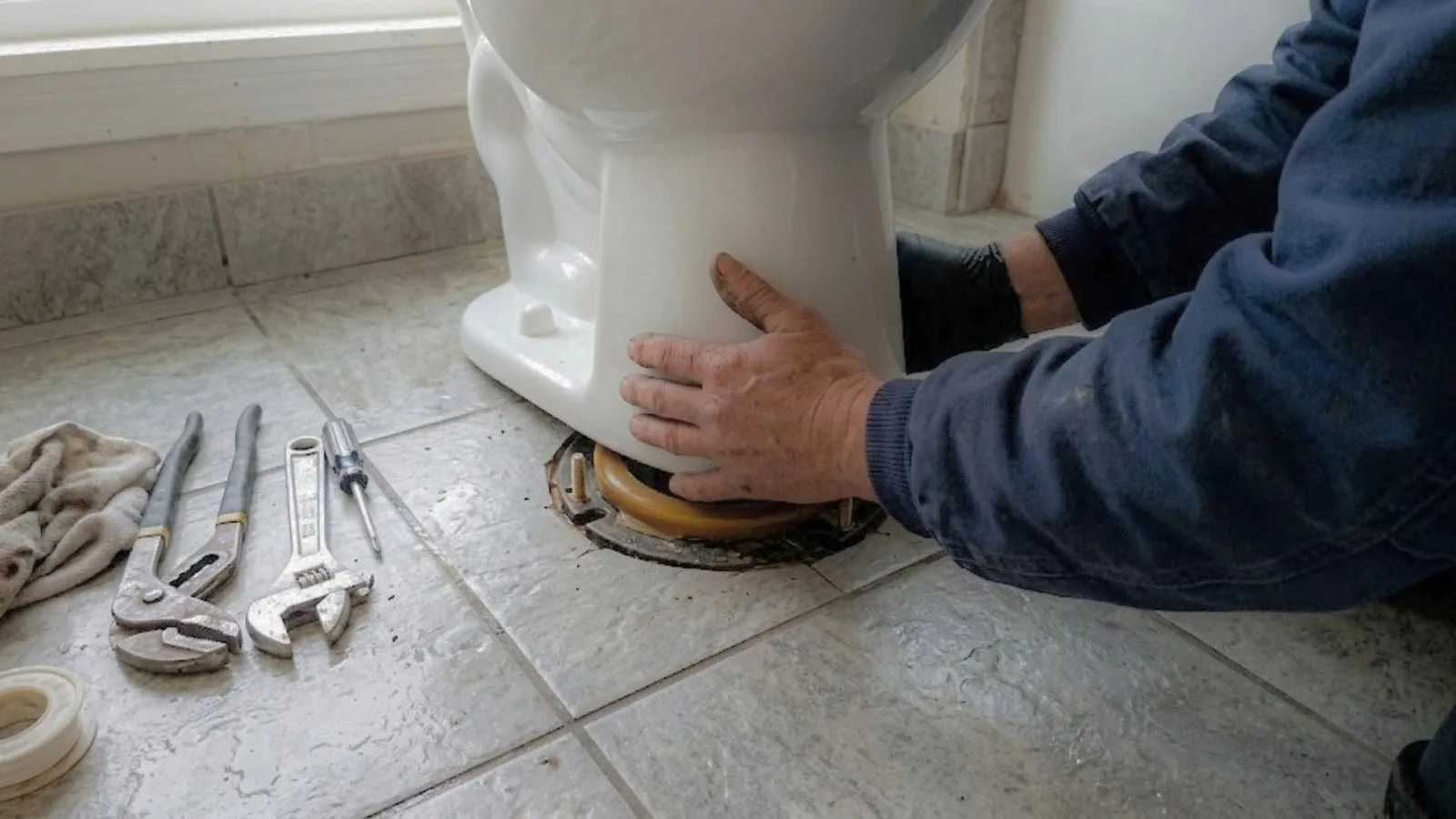
A puddle around the base of the toilet, a rocking bowl or a soft spot in the floor usually means the wax ring has failed. The fix is to shut the water off, lift the toilet, replace the seal and check the flange it sits on.
Water under the tank or dripping from the tank bolts is a different repair. Sort out which one you have before buying parts, and call a plumber if the floor feels spongy.
How a failed seal shows itself
The wax ring sits between the toilet outlet and the drain flange in the floor. When it stops sealing, water escapes at the bottom of the bowl, often only during a flush. Licensed plumbers work to the 2021 International Plumbing Code (IPC) as adopted in Colorado, which expects the toilet to sit on a sound flange, so look at the flange before you buy a ring.
Water at the base after flushing.
Each flush pushes water through the joint. A slightly leaky ring may only weep for a few seconds.
A toilet that rocks.
Movement breaks the seal over time. A bowl that shifts under you is a common cause, not just a symptom.
Sewer smell near the toilet.
A gap in the seal lets sewer air into the room, even when no water shows.
Stained or lifting flooring.
Vinyl that bubbles or tile grout that darkens at the base points to moisture below the surface.
A floor that gives underfoot.
A soft spot near the toilet suggests the subfloor has been wet for a while.
Tank leak or base leak, which is it?
Dry the whole toilet with a towel and wait. Where the first drop appears tells you what to fix.
| Where water appears | Common cause | Typical remedy |
|---|---|---|
| Under the tank, dripping to the floor. | Worn tank-to-bowl gasket | Replace the gasket and bolts. |
| Around the tank bolts | Loose or corroded bolt washers | Snug or replace the washers. |
| At the supply connection | Loose or tired supply line | Tighten or replace the line. |
| Down the outside of the bowl. | Sweating on a cold day | Insulate or run a vent fan. |
| At the floor, only after a flush. | Failed wax ring or loose closet bolts. | Reset with a new seal. |
Sweat from a cold tank looks like a leak but dries up on its own when the air warms.
Replacing the wax ring, in order
This is a moderate job for a handy homeowner with a helper, since a full toilet is heavy and awkward.
- Shut off and drain.Close the supply valve, flush, and hold the handle until the tank empties. Sponge out the rest.
- Disconnect and lift.Remove the supply line and the two nuts at the base. Rock the bowl gently to break the old seal, lift it straight up, and set it on a towel or cardboard.
- Scrape and inspect.Remove the old wax from the flange and the toilet outlet. Look closely at the flange for cracks or a bent ring.
- Set the new seal.Stuff a rag in the pipe to hold back sewer air. Seat the new ring on the flange or outlet, according to its instructions, then lower the bowl straight down.
- Bolt, test, and caulk.Tighten the nuts evenly, a little at a time. Reconnect the water, flush several times, and check the base for dampness.
The flange decides whether the new ring will hold
A fresh seal cannot make up for a broken flange. If the flange sits below the finished floor, is cracked or has rusted bolt slots, the ring will not compress properly and the leak returns. Repair rings and spacers exist for many conditions, but a damaged flange often needs a plumber's hands.
DIY it or hand it over
Both routes are reasonable. The choice hinges on what you find when the toilet comes up.
Reasonable for you to try
- Flange looks solid and sits level with the floor.
- Subfloor is dry and firm when pressed.
- Closet bolts come out cleanly.
- You have a helper to lift the bowl.
Better with a licensed plumber
- Flange is cracked, rusted or below floor level.
- Subfloor is dark, soft or crumbly.
- The toilet has leaked for months.
- Drain behind the flange looks blocked.
What leaking at the base can do to your floor
Small amounts of water behind a toilet can sit against plywood for a long time. The wood softens, a smell builds, and the flange screws lose their grip. By the time the vinyl bubbles, the damage below may be larger than the stain suggests.
If a seal has been weeping for a while, do not just reset the toilet and move on. Press the floor around it with a screwdriver tip. If it sinks in, the wood needs repair before the toilet goes back.
Before you buy a new ring
Run through this list so the hardware store trip is one trip.
- Confirm the leak source.Tank, supply line and base leaks each need different parts.
- Check the toilet bolts.If they are loose, tighten them alone once and watch for a day.
- Measure the flange height.Note whether it is flush with the floor, above it or below it.
- Look at the drain outlet.Make sure the pipe is clear and the flange ring is round.
- Plan a spot to set the toilet.The bowl will be wet and heavy, so lay down towels first.
When water behind the wall points somewhere else
A toilet that seems to leak but stays dry at the base after a good wipe-down may not be leaking at all. Water on the floor near the toilet can also come from a hidden supply or drain leak. If you cannot match the dampness to a single spot, leak detection with listening gear and a moisture meter can find the source without opening floors.
For the repair itself, toilet repair by a licensed plumber covers resetting the bowl, replacing the flange parts and checking the drain. You get a clear price before work starts.
What this means in Firestone, CO
Most homes in Firestone were built after 2000. If yours has a toilet on an upper floor or over finished space, a slow base leak can stain a ceiling below long before you see water, so check the room underneath if you suspect a leaking seal.
If the repair turns up a damaged flange or drain and you wonder whether a permit is needed, ask the Firestone building division, since permit rules vary. Homeowners in nearby Mead and Erie should ask their own building department the same question.
Questions homeowners ask
Dry the toilet completely and flush. If water appears only at the floor, the ring or closet bolts are the likely cause. If it shows under the tank first, look at the tank gasket.
Gently, yes. Snug the nuts a little on each side and watch for a day. Overtightening can crack the porcelain, so stop at firm.
Not always, but do not ignore it. If water is pooling or the floor feels soft, close the supply valve and stop using the toilet until it is fixed.
Yes, when the flange is damaged or the toilet is not seated flat and level. A repeat leak after a fresh ring points to the flange or the floor.
It does. A leak above finished rooms can show first as a stain or drip below, so look at the ceiling underneath and tell the plumber what you see.