
Shut off every water-using fixture, then watch your meter. If the leak indicator spins or the numbers climb while nothing is running, water is leaking somewhere between the meter and your fixtures.
Check the toilets and irrigation first, since they cause most surprises. If the meter still moves with those ruled out, a hidden leak in the house or service line is likely, and a plumber can locate it without digging blindly.
Running the meter test, start to finish
Set aside twenty quiet minutes when nobody is home or using water.
- Stop all water use.Turn off faucets, the dishwasher, washer and ice maker. Make sure the irrigation system is not scheduled to run.
- Find and open the meter box.The meter usually sits in a box near the street or the front of the property. Lift the lid carefully and clear any debris.
- Look at the leak indicator.Many meters have a small dial or triangle that spins when any water moves. If it turns, water is flowing.
- Record the reading.Write down the full number on the register. Wait thirty minutes to an hour with no water use, then read it again.
- Compare.Any change at all means water is moving through the pipe. No change means the leak, if any, happens only when something is running.
What a meter reading actually tells you
A moving meter means a leak exists somewhere downstream of it. That could be a toilet flapper, an irrigation valve, a pipe in the wall or a line under the yard. A still meter during the test does not clear you, though. Some leaks only appear under pressure or when a fixture is in use, such as a shower valve or a sprinkler zone.
Treat the test as a way to narrow things down. It tells you whether to keep hunting or stop worrying.
Rule out the common culprits before calling
Work through these in order, because the first two are the most frequent sources of a surprise bill.
- Every toilet in the house.Add a few drops of food coloring to each tank. If color shows in the bowl without flushing, the flapper is leaking.
- The irrigation system.Check for soggy patches, a valve stuck open, or a sprinkler head that sprays at night when nobody is watching.
- Outdoor hose bibs.A hose left connected can drip for days. Look at the spigot and the ground around it.
- Water heater and softener.Scan for wet floors, rusty drips or a pressure relief valve that is weeping.
- Ice maker and fridge line.A small tube in the back can crack and leak into a wall or cabinet.
If the meter keeps moving, where to look next
Use your results from the checklist to narrow the field.
| What you found | What it suggests | Next step |
|---|---|---|
| Meter moves, toilets are clean | Leak in a wall, slab or buried line. | Pipe-by-pipe test or a leak locator visit. |
| Meter moves only when irrigation is on. | Zone valve or sprinkler line leak. | Shut off irrigation and check each zone. |
| Meter still when house valve is closed. | Leak is inside the house | Look at fixtures and wall lines. |
| Meter moves with house valve closed. | Leak is outside, on the service line. | Locate the leak between meter and house. |
| Meter is still, bill is still high. | Usage change or a billing question. | Ask your utility to review the reading. |
Closing the main valve to the house splits the problem in two, which narrows the search quickly.
The house shutoff trick
After a moving meter, close the main valve where water enters the house and check the meter again. If it stops, the leak is inside the building. If it keeps moving, the leak is outside, in the line between the meter and your wall. That one step can save a lot of guessing.
Toilets, irrigation and service lines compared
Toilet leaks are the easiest to fix, often with a flapper or a fill valve. Irrigation leaks hide in soil and may show as a wet patch or unusually green grass. Service line leaks sit underground between the meter and house and can show as soft ground or low pressure.
If your pipes are older or have failed more than once, a bigger plan may help. Our repiping work replaces failed sections or whole runs, and the camera and listening work we do first shows whether you need that.
When listening gear beats digging
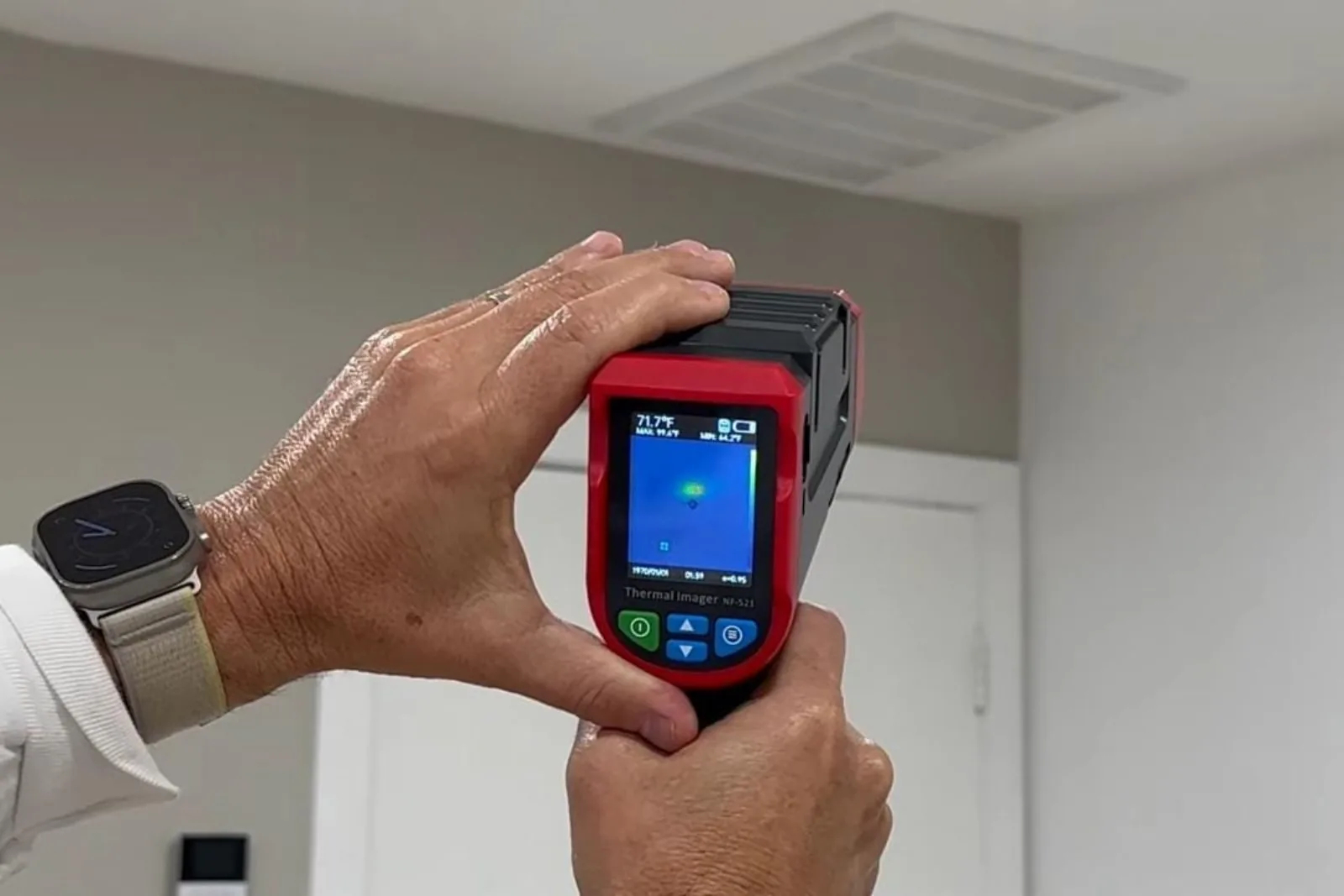
A hidden leak does not have to mean tearing up the lawn. Leak detection uses acoustic listening, thermal imaging and pressure testing to pinpoint a leak before any digging starts. That keeps the opening small and the repair focused.
The price is clear before work starts. If the leak is on the utility's side of the meter, we will tell you, and you can report it to your water utility. Ask your water provider for its own guideline on meter and service line responsibility, because that document settles who pays for a repair on the street side.
What your utility can and cannot tell you
Your water provider has the billing data, but not your pipes.
Ask the utility for
- Your meter read history.
- Whether a read was estimated.
- Any alert on unusual use.
- Who owns the line up to the meter.
A plumber covers
- Finding leaks inside your property.
- Testing and repairing house lines.
- Checking fixtures and the water heater.
- Repairing the service line on your side.
What this means in Firestone, CO
The Town of Firestone does not treat water. Per its 2024 Consumer Confidence Report, it buys treated water from Central Weld County Water District and from St. Vrain Water Authority. So your bill, your meter and your usage history may come from the Town or from a supplier, depending on your address.
Ask your water utility who bills you and who owns the line up to the meter. Everything between the meter and your house is typically your side, and that is where a plumber works. Neighbors in Dacono have a different utility, so the same question applies there. The meter test works the same way in Frederick, though the utility you call about the bill is a different one.
Questions homeowners ask
Thirty minutes to an hour with no water use is a reasonable window. Longer is fine if you can manage it.
Water is flowing somewhere past the meter. Check toilets and irrigation first, then close the house valve to see whether the leak is inside or outside.
It can be. If the meter test is clean, ask your water utility to verify the reads and confirm whether any were estimated.
Call your water utility. Pipe on the street side of the meter belongs to the utility, so ask who owns what at your address.
It depends on your address. The Town buys water from two suppliers, so check your bill to see who sends it, then ask that office about your meter.