
Vinegar will not clear a main sewer line. It is a mild acid that can loosen a little film inside a sink drain. It cannot dissolve a root mass, a grease plug or a sag in the pipe. A main line is far too large and too far away for a cup of it to matter.
If several drains are slow or a floor drain gurgles, skip the pantry remedies and call. Never pour vinegar after a store-bought drain chemical, because the mix can release fumes.
What vinegar can and cannot do
Household vinegar is roughly a few percent acetic acid in water. That is enough to cut light mineral film and freshen a trap, and nowhere near enough to eat through a clog packed into a pipe.
What it can do
- Loosen a thin film of soap scum near a sink strainer.
- Cut light mineral crust on a pop-up stopper.
- Reduce a stale smell in a rarely used drain.
- Rinse residue from the first foot or two of a branch line.
What it cannot do
- Dissolve tree or shrub roots that entered a joint.
- Melt a hardened grease plug further down the line.
- Fix a sag, crack or offset in a buried pipe.
- Clear a blockage you cannot reach from a fixture.
Why a main line blockage laughs at a cup of vinegar
Your main sewer line is the pipe that carries everything from the house out to the municipal sewer or septic system. It is usually four inches wide and runs underground for dozens of feet. A cup poured down the kitchen sink is diluted by the time it reaches the first junction.
Most main line stoppages are physical. Roots push into joints and grow into a mat that catches paper. Grease cools and builds a rind on the pipe wall. Wipes and hygiene products knot together. Acid in a pantry strength does nothing to any of those, and the water you flush behind it just carries the vinegar away.
Think about where the blockage sits. If it is in the main, vinegar poured at a sink never gets there as anything but weak, watery liquid. If it is in a short branch, a drain snake or a plunger does the job faster.
Match the symptom to the right next move
The pattern of what is slow tells you more than any remedy does.
| What you notice | Likely location | Better move |
|---|---|---|
| One sink drains slowly | That fixture or its trap | Plunger, then a small hand snake. |
| Tub and toilet both gurgle | Shared branch line | Stop adding water and call. |
| Floor drain or lowest shower backs up. | Main sewer line | Call right away, do not run fixtures. |
| Slow drains return within weeks | Roots, grease or a belly | Camera look and a cleaning plan. |
| Smell but normal flow | Dry trap or vent | Run water in unused fixtures. |
A pattern across several fixtures almost always points downstream of all of them, which is the main line.
The vinegar and baking soda fizz is mostly theater
Mixing the two makes carbon dioxide and a weak salty solution. The foaming looks busy, but most of the reaction happens in the first seconds, right at the drain opening. Flush it with hot tap water afterward and you have done little more than rinse the trap.
A safe way to freshen a slow kitchen or bath drain
Use this only for a single slow fixture, never for a backup.
- Remove what you can reach.Lift the stopper or strainer and pull hair and debris by hand with gloves on. This clears more than any liquid will.
- Pour vinegar alone.Add about a cup of plain white vinegar and let it sit for a half hour. Do not add any other cleaner.
- Flush with hot tap water.Run hot water from the tap for a couple of minutes. Avoid boiling water on plastic pipe joints or on a toilet bowl.
- Retest.Fill the basin and watch it drain. If it still crawls, use a plunger or a small hand snake, then stop.
Never combine it with anything else
Vinegar mixed with a bleach product releases chlorine fumes. Vinegar poured onto a drain opener that is already sitting in the pipe can splash back and burn skin or eyes. Treat each product as a single use and rinse with plenty of water before trying anything new. Read the product label and the manufacturer's safety guidelines first, since they list what must never be combined with that opener.
If you already used a chemical opener and the drain is still stuck, tell the plumber when you call. The standing liquid may be caustic, and a technician needs to know before putting hands or tools near it.
Roots and grease, the two real culprits
Both of these are slow builders, which is why a main line backup often feels sudden when it has been forming for a long time.
Root intrusion.
Roots seek moisture and enter at joints or hairline cracks. Once inside they thicken and catch paper. They do not dissolve in vinegar.
Grease buildup.
Fat washes down warm and sets cool. Layer by layer it narrows the pipe until little can pass.
Wipes and paper products.
Products sold as flushable often do not break up. They snag on rough spots and join the mass.
A low spot or offset.
If the pipe has settled, water sits in the dip and leaves solids behind. Cleaning helps, but repair is the lasting fix.
Signs the problem is bigger than a pantry remedy
Any one of these means stop pouring and call a licensed plumber.
- More than one fixture is affected.A toilet bubbling when the washer drains is a classic main line sign.
- A floor drain or lowest tub backs up.Water takes the lowest exit when the main is blocked.
- Gurgling after you flush.Air is being pushed back through traps because the pipe is restricted.
- The same clog returns.A repeat clog usually means something is still in the pipe.
- Wet or sunken spots near the cleanout.A damp patch in the yard may mean a break, not just a clog.
What a plumber does that vinegar cannot
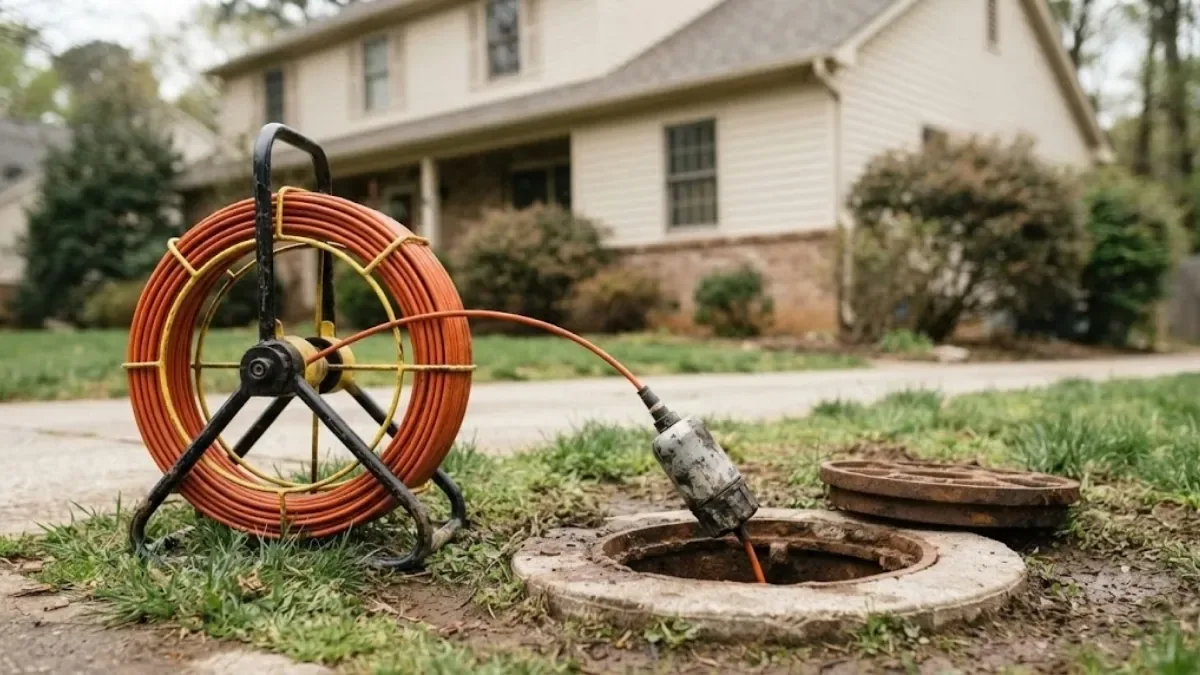
For a main line stoppage, a licensed plumber typically starts at the cleanout and runs a motorized cable that cuts through roots and pushes out soft blockages. When the pipe is coated with grease, hydro jetting uses high pressure water to scour the wall. A camera pass afterward shows whether the pipe is cracked, sagging or full of roots again.
Our sewer line cleaning work follows that order. You get a clear price before work starts, and we tell you if the video shows damage that cleaning alone will not solve.
Keeping the main line clear between visits
Collect cooking fat in a can and throw it out with the trash. Keep wipes, floss and feminine products out of the toilet. Run plenty of water after laundry loads. Know where your cleanout is so you can point to it quickly.
If a camera shows roots, ask about timing for follow-up cleaning. Roots usually come back until the joint is repaired, so a schedule beats guessing.
What this means in Firestone, CO
Most Firestone homes were built after 2000, so their sewer pipes are newer, but that does not stop a belly from settling or a root from finding a joint. Homes inside the original 1907 townsite are far older, and an older lateral deserves a camera look before you assume a clog is all it is.
Sewer service varies by address, so ask your water utility or the Town which entity serves your line, and ask the Firestone building division what rules apply if repair work needs a permit. Neighbors in Frederick and the rest of the Tri-Towns face the same root and grease problems, so the advice above carries over. That holds in Erie as well, where a main line blockage is a job for a plumber and not a vinegar job.
Questions homeowners ask
No. It can loosen a little film at a sink, but it cannot reach or break up a blockage in the main line.
Plain white vinegar in modest amounts is gentle on most household pipes. It simply does not solve a real clog, so do not rely on it to prevent one.
Do not. Mixing products can release fumes or cause splashing. Flush with plenty of water, wait, and call a plumber if the drain is still stuck.
Look for slow drains in more than one fixture, a gurgling toilet, or water rising in the lowest drain in the house. Those signs point downstream of the branches.
That depends on your address, so ask your water utility who maintains the pipe past your property line. Pipe on your side of the line is usually your responsibility, and a plumber can show you where yours ends.