
Baking soda is a mild cleaner, not a clog remover. It can freshen a sink and loosen a thin film inside the pipe. It will not break up a hair mat, a grease plug, or a blockage further down the line.
The safe routine is short. Clear the standing water, add baking soda, follow with hot tap water, then flush. Never combine it with a store-bought drain chemical. If the sink is still slow after one round, stop and call for drain cleaning.
What baking soda really does inside a pipe
Baking soda is sodium bicarbonate. It is a weak base and a very fine powder. In a drain it can absorb some odor and scrub a thin layer of soap and oil off the pipe wall.
That is the whole job. It does not dissolve hair, and it does not cut through a solid plug of cooled cooking fat. A clog is usually a mass of material wedged at a bend, and powder poured on top of it just sits there.
So the honest way to think about it is maintenance. It is a monthly freshen-up for a drain that still flows, not a rescue for one that has stopped.
Where it helps and where it does not
Match the problem to the tool before you pour anything.
| What you see | Will baking soda help? | Better move |
|---|---|---|
| Faint smell from a sink that drains normally. | Often yes, a little | Baking soda then hot water, then run the tap. |
| Water drains a bit slower than last month. | Sometimes, if it is only film. | One round of the routine below, then retest. |
| Standing water that will not move. | No | Plunger, then a hand drain tool, then a plumber. |
| Kitchen sink with a grease plug. | No | Hot water softens fat only if the plug is near the opening. |
| Gurgling or backing up in more than one fixture. | No | Stop and call. The problem is likely in the main line. |
The more fixtures involved, the less a sink remedy can do. One slow sink is a branch problem. Several slow fixtures point to a shared line.
A safe sequence for a slow kitchen or bathroom sink
Do this once. If the result is not clearly better, do not repeat it five times.
- Remove what you can reach.Take off the stopper or strainer and pull out any hair or debris. In many bathroom sinks this alone fixes the slowdown.
- Clear the standing water.Scoop or bail the water out of the basin. Powder needs to reach the pipe wall, not float in a pool.
- Pour in the baking soda.Use about half a cup. Push it into the drain opening with a spoon so it does not sit on the basin.
- Follow with hot tap water.Run the hot tap for a minute or two. Hot tap water is enough. A kettle of boiling water can soften plastic joints and crack older porcelain.
- Flush and test.Run cool water for a full minute and watch how fast the basin empties. If it still pools, stop and move to a plunger or a call.
The one rule that protects your eyes and lungs
Never mix baking soda, vinegar, or anything else with a chemical drain cleaner. Many of those products contain bleach or strong acid or lye, and the combinations can release harmful gas or splash back hot. The product label and the maker's safety guideline are the real source for what a chemical opener can be mixed with, and the usual answer is nothing.
If you already poured a chemical product, do not add anything on top. Do not plunge either, because the liquid can spray. Keep the room ventilated and tell the plumber exactly what is in the pipe when you call. A plumber working on a chemical-filled drain needs to know.
The vinegar fizz question
The classic volcano of baking soda and vinegar looks impressive. Most of the fizz is carbon dioxide leaving the liquid, and what remains is mostly salty water. The reaction mostly cancels itself out.
If you like the sound of it, it does little harm in a sink that already flows. Just do not count on it to open anything. A plain baking soda and hot water routine does about as much, with less mess.
Skip vinegar if you have used any chemical cleaner in the last few days. Residue in the trap can still react.
Signs the clog is past any home remedy
Any one of these is a reason to stop pouring and make a call.
- The same sink clogs again within days.A quick return usually means the blockage was only partly cleared, or the real problem sits deeper in the line.
- Two or more fixtures are slow.A tub that gurgles when the washer drains is a classic sign of a blocked shared line.
- A toilet bubbles when the sink drains.Air is being pushed through water traps because the line is restricted beyond them.
- Water backs up into a floor drain or tub.This points toward the main line, and a sink remedy cannot reach that far.
- Foul sewer smell that returns after cleaning.A dry trap or a venting problem can cause it, and neither is a baking soda job.
- You used a chemical product and nothing moved.Leave the pipe alone and tell the plumber what went in.
What a plumber does that the kitchen cupboard cannot
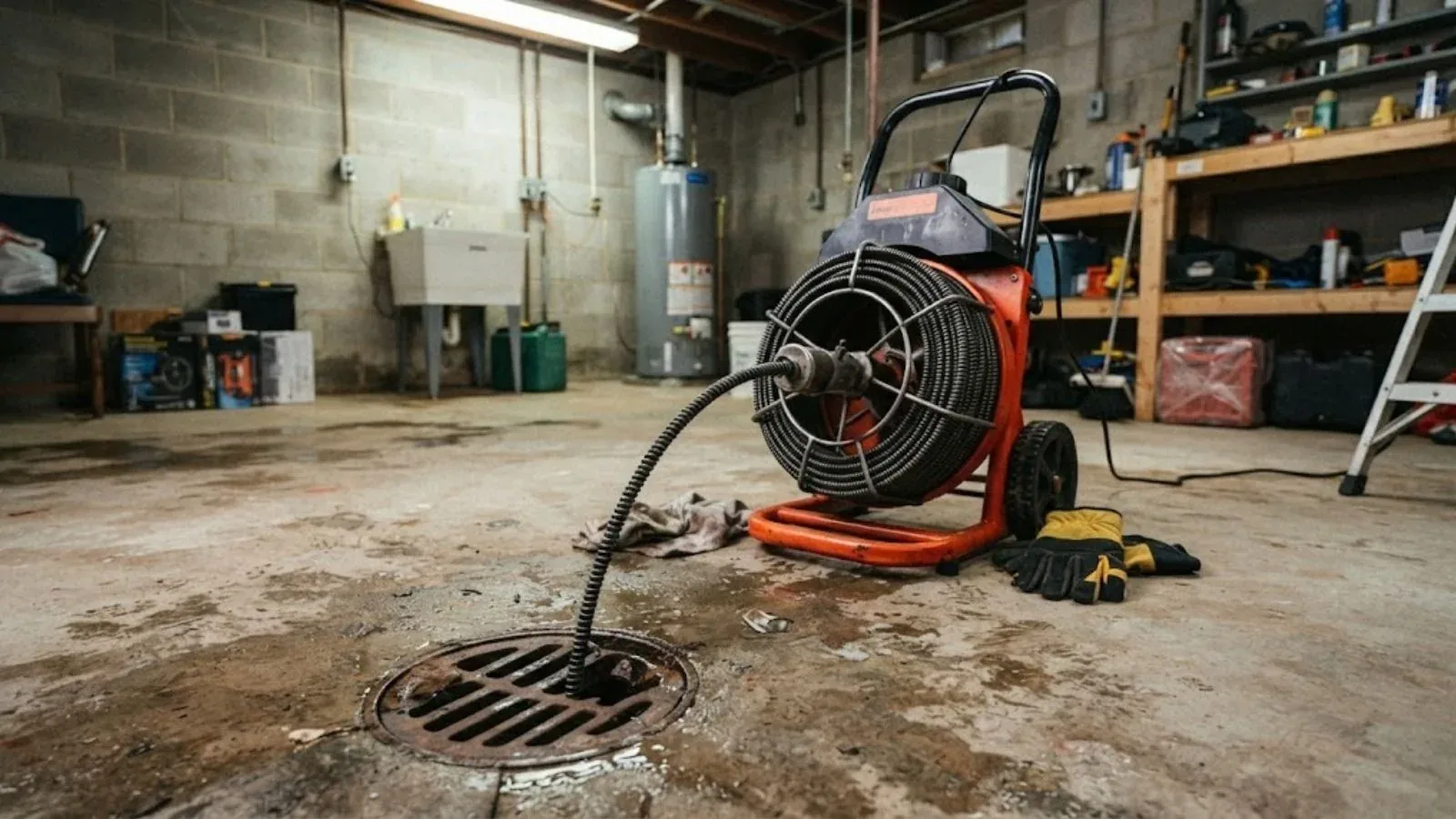
A plumber starts by finding where the blockage sits. A trap and a short run can be cleared by hand. A longer line may need a drain machine with a cutting head on a cable.
Greasy or root-filled lines respond better to water at high pressure. That method is called hydro jetting, and it scours the pipe wall instead of poking a hole through the middle of the plug. A camera can then confirm the line is clear and show whether a crack or sag caused the clog.
Ask for the price before work starts. We give a clear price before work starts, and it depends on where the clog is and how the line is reached.
What this means in Firestone, CO
The local wholesale supplier Central Weld County Water District calls its water soft, with a 2025 average near 33 mg/L total hardness. Soft water leaves little mineral scale, so a slow drain here is more often hair, soap film, or grease than scale. That means a descaling trick is the wrong first move, and pulling the stopper usually pays off sooner.
Firestone buys water from more than one supplier, and the Town does not publish a hardness figure for every address. Find out which supplier feeds your tap, then read that supplier's report before buying any water product.
If you live across I-25 in Frederick, the supplier can be different again, so the same advice applies. Readers in Dacono can follow the same sink steps, and a stubborn clog there is the same call to make.
Questions homeowners ask
Once a month is plenty for a drain that flows well. Weekly use adds nothing and can hide a developing clog.
If a sink needs treatment more often than monthly, the real cause is likely deeper in the line.
It can. Boiling water can soften plastic joints and thermal shock can crack older porcelain basins. Hot tap water is the safer choice for routine use.
Yes, a small amount rinsed through with water is fine. It will not clear a jam or a clogged disposal drain.
If the disposal hums and will not turn, turn it off at the switch and do not put your hand inside.
No. Gurgling in more than one fixture usually means a restricted main line. Powder poured into one sink cannot reach it.
Soft water leaves less mineral scale than hard water, so scale is rarely the first suspect. Hair, grease, and soap film remain the usual causes.
Each supplier publishes its own water report, so look up the one that matches your street.