
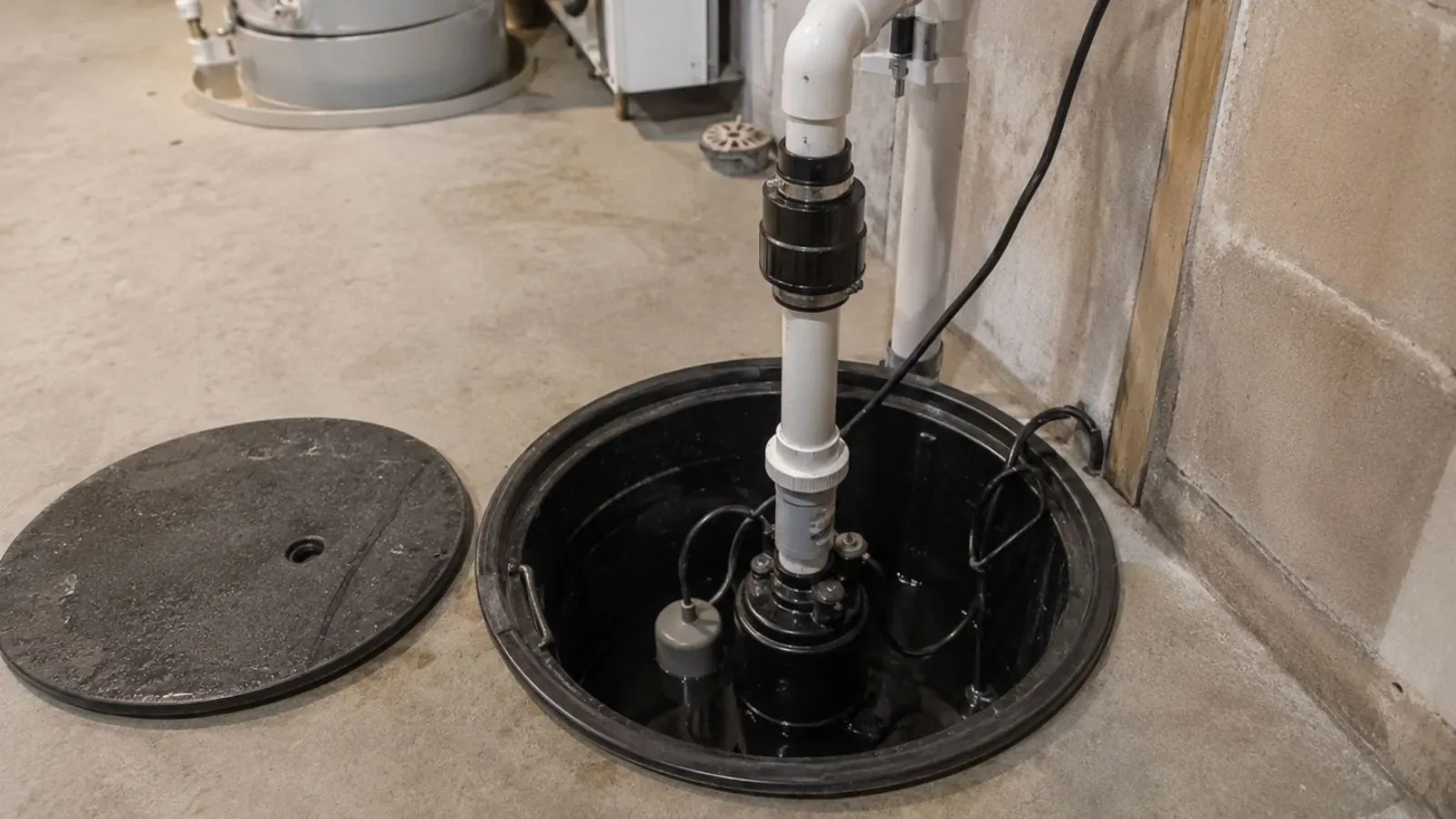
A battery backup sump pump is a second pump in the same pit, powered by a battery, that takes over when the main pump or the power fails. You want one if water in your pit is a regular event or the basement is finished.
Installation is plumbing work: a second pump or a combined unit, its own float, a check valve, and a discharge line that goes outdoors. Call (303) 552-3896 if you want the pit and pipes looked over by a licensed plumber.
What the backup actually does when the main pump quits
A main sump pump sits in a pit and pushes water out when a float rises. A backup is a second pump that wakes up only if the first one fails or the water keeps climbing. It runs on a deep-cycle battery that charges while the house has power.
Backups come in two common styles. One is a separate pump mounted a little higher in the pit. The other is a combination unit where one controller handles the main and the standby. Both need a place in the pit, and the pit has to be wide and deep enough to hold them.
Signs your basement should have a backup
No single sign settles it, but these come up often.
- Pump runs often after rain or snowmelt.A pump that cycles constantly is working near its limit and has no spare.
- Finished space below grade.Carpet, drywall, and stored items raise the cost of any flooding.
- Power outages in storms.The main pump stops with the power, even if everything else is fine.
- Old main pump.A pump that is aging may fail without warning during a heavy event.
- No alarm on the pit.Without a high-water alarm, you only learn about a failure when the floor is wet.
Backup styles compared
Pick by how the pit is built and how long you may need the pump to run.
| Style | How it works | Good fit | Watch for |
|---|---|---|---|
| Second pump on a battery | Stand-alone pump sits above the main one and triggers on a higher float. | Pits with room for two pumps. | Battery size sets how long it can run. |
| Combination unit | One controller runs the main and the standby. | Replacing an old pump at the same time. | Both pumps sit in one system. |
| Water-powered backup | Uses pressure from the water supply to push the water out. | Homes that lose power often | Not every setup suits it, and it uses water. |
| Alarm only | Warns you, no extra pumping | Dry pits with rare use | Does not move water on its own. |
Ask your plumber which style the pit can actually hold before you buy anything.
Where the water goes: discharge routing
A sump discharge line has to carry water outdoors and well away from the house. If it ends right beside the foundation, the same water sinks back down and returns to the pit. Many homes with a pump that never rests have a discharge that dumps in the wrong spot.
A backup can share the main pump's line or have its own. Each pump needs its own check valve on its own pipe, so one pump does not push water into the other. Joining the lines above both valves is the usual method.
Float switches and the alarm decide whether the backup helps
Each pump has a float that tells it when to start. If the floats tangle with each other or snag on the pit wall, a pump can sit still while water rises. Good installs keep the two floats clear of each other and of the pipes.
A high-water alarm is cheap insurance. It tells you a pump has run behind or stopped, so you can act while the water is still in the pit. Without it, you may only find out when you step in a wet spot.
The check valve is what keeps water from falling back
A check valve is a one-way gate on the discharge pipe. Without it, the water in the line drops back into the pit every time the pump stops, and the pump has to move the same water again. That wears the pump and keeps it cycling. Licensed plumbers work to the 2021 International Plumbing Code (IPC) as adopted in Colorado, and the pump maker's installation guideline says which valve suits your pump.
A second pump makes this more important. If the backup has no valve of its own, the main pump can push water backward through it. Valves wear out, so a pump that clacks loudly or cycles on and off after each run may need a new one.
What a backup installation visit looks like
The details change with the pit, but the order is similar.
- Inspect the pit.The plumber checks width, depth, lid, current pump, and where the discharge exits.
- Test the main pump.A pump that is failing may be replaced during the same visit.
- Set the backup and its float.The backup sits so its float triggers a little higher than the main one.
- Fit valves and discharge.Each pump gets a check valve, and the line is checked outdoors for a clear end.
- Wire the battery and alarm.The charger needs a safe outlet. Then test by lifting each float by hand.
What a plumber does and what belongs to someone else
Our work stays on the plumbing side: the pumps, floats, valves, and discharge pipe. If water comes in through cracks or the wall, that is a drainage or foundation question. Read about basement waterproofing for how to tell the difference, and see sump pump repair if your current pump has stopped.
Maintenance that keeps a backup ready
A backup that has never run is hard to trust. Test it on a schedule.
- Pour water in the pit.Watch each pump start and shut off cleanly.
- Check the battery.Read the maker's guidance on battery age and replacement.
- Clear the discharge outlet.Look for ice, leaves, or a crushed pipe end.
- Listen for the alarm.Press the test button if the unit has one.
What this means for a basement in Firestone, CO
The Colorado Geological Survey calls expansive clay the state's most significant geologic hazard. Its guidance links trouble to poor surface drainage and irrigation water soaking in next to foundations. That is a statewide statement, not a soil finding for any one Firestone lot, but it is a reason to check where your downspouts and sprinklers send water before you blame the pump.
If your property is rural, such as outside the town limits near Mead, ask which building department covers it, since unincorporated parcels fall under the Weld County Building Department. Permit rules vary, so ask the Firestone building division whether pump or discharge changes need one at your address. A basement in Frederick has the same backup question, and our dispatch covers that town too.
Questions homeowners ask
It depends on the battery, the pump, and how fast water enters the pit. The maker publishes run time figures for each model. Ask your plumber to size the battery for your worst case.
Some homeowners do. The tricky parts are the pit fit, the second check valve, and the discharge. If any of that is unclear, a plumber should do it.
Not always. A shared line works if each pump has its own valve. A separate line gives you a second path if one freezes or clogs.
No. It handles water that reaches the pit. Water through walls or floor cracks is a drainage or foundation problem that a pump does not solve.
It can if the outlet is blocked or the pipe holds standing water. Check that the end is clear and slopes away, and ask your plumber about ways to reduce the risk.